Disabled kids who get DLA not disabled enough for PIP

The number of disabled children who are kicked off benefits when they are reassessed as an adult has doubled in two years.
Under the Department for Work and Pensions’ (DWP) rules, children get disability living allowance (DLA) until they are 16. Instead of just automatically moving on to Personal Independence Payment (PIP), they then have to reapply.
It should be a straightforward process, but because PIP is a needlessly cruel system, many find it harder to qualify for.
Disabled kids suddenly not disabled at 16
Information service, Benefits and Work, examined the statistics on moving from Child DLA to PIP on DWP StatXplore. Its team found that between 2023 and 2025, the rate of failure doubled.
From August to October 2023, 11% of claimants who had received DLA failed the assessment to get PIP. But for the same quarter in 2025, the failure rate had jumped to 23%.
Those are the most recent stats available, so the situation could be much worse by now.
Not only that, but success rates where the claimant gets more money with PIP than they did from DLA have also fallen.
Between August and October 2023, 69% of claimants saw an increase in their award from moving to PIP. But in the same quarter in 2025, this increase rate was 54%.
So, despite there being no changes to the PIP assessment yet, it’s clearly already a ridiculous system to qualify for, if there’s such a discrepancy between children getting DLA and over-16s getting PIP. A young person’s disabilities don’t magically disappear on their 16th birthday.
Higher poverty rates
It’s especially worrying to see that so many disabled young people are left without support once they turn 16, when you consider how many disabled children live in poverty.
The children’s charity Variety found that 21,000 disabled children live in temporary accommodation. This equates to one out of every eight children facing homelessness.
It’s also important to consider that temporary accommodation often cannot meet the needs of disabled people.
Temporary accommodation is supposed to be a short-term fix, but Variety found that, on average, disabled children spend six to 10 months in temporary housing. Some cases exceeded six years.
Whilst there have been no policy changes since 2023, there has been a sustained campaign by the Tories and then Labour to demonise benefits claimants.
These latest statistics evidence another way that the DWP is trying to make life harder for people with disabilities.
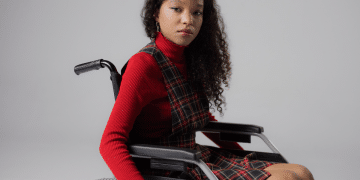
Featured image via cottonbro studio


Leave a Reply