UAE denies it paid Iran to stop bombing

The UAE has denied it paid Iran to stop bombing the country as the Iran-US ceasefire began, calling allegations “false and unfounded”.
The UAE’s payments may point to another US humiliation if found to be true.
Last week, Reuters reported:
The United Arab Emirates has agreed to unlock billions of dollars for Iran, four sources said, in a tactical shift after weeks of Iranian attacks on the wealthy Gulf Arab state during the U.S.-Israeli war with the Islamic Republic.
***
Word of the move, which has not been previously reported, coincides with the final stages of broader negotiations between Tehran and Washington on ending the war, talks that diplomats say could involve the release of tens of billions of dollars in Iranian oil revenues frozen in foreign banks under U.S. sanctions.
The UAE released a statement denying the claims:
The United Arab Emirates has categorically denied reports published by certain international media outlets alleging the transfer of funds from the UAE to the Islamic Republic of Iran, including allegations concerning USD 3 billion.
In a statement, the Ministry of Foreign Affairs affirmed that these allegations are entirely false and unfounded, stressing that no frozen Iranian funds have been released, transferred, or facilitated through the UAE.
The Ministry also called on media outlets to exercise accuracy, rely on official sources, and refrain from publishing or circulating unverified information and unfounded allegations.
UAE wrangling and declining US influence
However, an unnamed UAE official told Reuters:
The UAE’s foreign policy is guided by promoting de-escalation and reducing tensions across the region, while advancing lasting peace and stability.
The UAE supports efforts, including those undertaken by the United States, to protect the peoples of the region from the repercussions of conflict.
The outlet could not establish:
…whether the funds earmarked for the transfers belong to the UAE or originate in long-blocked Iranian accounts in the UAE banking system, or elsewhere.
The White House did not comment and an Iranian source said the transfer was “directly linked to ensuring safe passage through the Strait of Hormuz”.
One source told Reuters that the agreement would be a way for Iran to obtain the payoff it sought in return for a ceasefire, while allowing the Trump administration to claim it did not pay.
This would tally with Trump’s (very optimistic) goal of ending hostilities without admitting to having failed.
Details of UAE’s behind-the-scenes wrangling as the war intensified have also emerged.
Middle East Eye reported:
The UAE joined the US and Israel in conducting dozens of strikes on Iran during the war. It also tried to prevent Pakistan from mediating an end to the conflict.
Saudi Arabia had to supply a fresh loan to Islamabad after the UAE called in its debt obligations as punishment for hosting talks.
Peace deal with a side of US failure
A peace deal has now been announced by the US, Iran and peace-broker, Pakistan. Legacy media reported that the terms were finalised and would be signed on 19 June.
The US and Israel attacked Iran first on 28 February without provocation. Iran was offering unprecedented concessions in negotiations at the time.
The Pentagon has since stated there was no imminent threat from Iran, Meanwhile, the UN’s atomic watchdog, the IAEA, has said there is no evidence Iran was developing a nuclear weapon.
The US has achieved none of its original war aims. Iran predictably closed the Strait of Hormuz, a vital oil channel which once attacked,k created a global energy crisis.
Far from being defeated, Iran has said the war will continue until “the enemy’s inevitable and permanent humiliation, disgrace, regret, and surrender”.
Donald Trump came to power on an anti-war ‘America First’ ticket. He now faces worldwide humiliation.
Much is unclear, but whatever security umbrella the US once offered to its Gulf dictator allies seems much less credible in the wake of the failed US-Israel attack on Iran. Not least because one of those dictatorships may have cut its own deal with Iran in the interest of self-preservation.
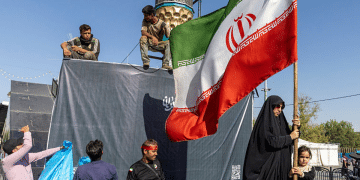
Featured image via Majid Saeedi/Getty Images
Leave a Reply