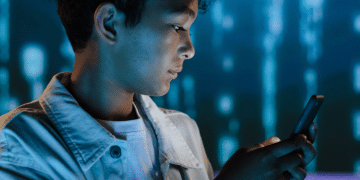
Why kids need (and hate) social media

Earlier this month, the UK parliament passed a law targeting children and teenagers’ social media use instead of the true root of the issue.
The social media ban for under 16s is not just another example of our government virtue signaling in an attempt to save face. It is also an example of its inability to address the fundamental flaws in the society it is forcing the next generation of young people to grow up in.
Social media ban: Why teens hate (and support) it
The social media ban, which will come into force in early 2027, is modelled off the ban in Australia.
Once announced, it was immediately met with a mixed reception from adults. However, the most important opinions are from the children it affects, whose reaction, to some people’s surprise, has been largely positive.
A recent government consultation showed that while parents nationwide have expressed relief and support for the ban, six in 10 teenagers also expressed support for legislative restrictions.
Nancy, 15, is quoted as saying:
I really think it’s a good thing because social media can bring up all sorts of bad stuff like bullying and a lot of things can be fake and it can be really addictive. I feel like it can mess with people’s brains as well…
Children as young as 13 have described the new law as, “The right thing to do”. While some have expressed doubt in the law’s effectiveness, that sentiment has been repeated by many teens.
This reaction is rooted in the fact that despite many adults’ perception, young people do understand the harms of social media. The vast majority of them have had firsthand experience of the negative effects of the internet, so they are aware of the dangers and want to help keep each other safe. If anything, they overwhelmingly recognise it.
However, despite this recognition, there is another common sentiment amongst under-16s in response to the ban: the feeling of worry.
According to the consultation, 72% of teenagers expressed worry and anxiety surrounding the new law. The BBC has interviewed teens who vow to keep their access to these platforms, which triggers the question: how can these two seemingly contradicting sentiments exist?
While the question appears complicated, it actually has a rather straight forward answer. Young people know the internet can hurt them, but it has become an essential part of teenage life.
A young person’s life is largely online
Social media and online technology has become almost inescapable and deeply ingrained into every part of modern life. From needing a LinkedIn profile to boost employment opportunities to an online app to park your car. This is by design.
Giant tech corporations have worked to integrate their platforms and tech into almost every part of daily life to the point it practically defines the modern day.
Children have always imitated the lives and behaviours of the adults around them. Therefore, in a society where adult life is defined so much by our online presence, the younger generation is also steered online to prepare for adulthood.
In fact, one of the key worries expressed by children and teens in relation to the ban is that they will become inexperienced with modern technology, and therefore, unprepared for adulthood.
‘Third spaces’ explained
A huge factor in teenage life, socially and mentally, are third spaces. Third spaces can be roughly defined as community spaces outside of your typical home or work/school environment and they are a necessity for older children and teenagers especially. Libraries and sports clubs, for example.
For teenagers, these spaces provide comfortable and safe environments for them to explore themselves, and build relationships and community on their own terms. Third spaces allow young adults to start constructing independence while still in their guardian’s care.
But, in recent years, third spaces have been disappearing as they have been deprioritised in public policy and life. Consider what has happened to youth clubs.
There is a specific lack of third spaces geared towards teenagers and the ones that do still exist, such as cinemas, leisure complexes and restaurants, are becoming too expensive for teens to use regularly. A large part of what makes up teenage culture then starts to disappear leading to an absence of areas outside of school and home for them to build community and freely socialise. That is when social media comes in.
A new ‘third space’
Social media is a replacement for the real world third spaces of the past because it is an environment where children can form relationships whilst finding community. It is being used as a virtual hub for youngsters to forge their identities and independence.
Children and teens crave environments where they are able to communicate freely amongst themselves and this is especially poignant today with how isolated young people feel. With limited places in the real world to hang out, which are also accessible and safe, social media platforms then become the go-to for teens to access a mainstream communal space.
A simple example can be found in how neurodivergent young people use social media to spread awareness and relate to others like themselves. As opposed to the otherwise isolated understanding of themselves they might have had without this access to millions of people online.
This highlights the issue that not only has our government (and capitalist governments all over the world) overlooked the necessity of these spaces for teens, but they are almost blaming teenagers for responding to an environment that has been shaped by their policies.
The older generation has constructed a world where teenagers have very few accessible places to go and where online media is integrated into almost every part of their lives. Then they are scolded for relying on these virtual platforms.
The true issue?
The world we have built for children and young people not only isolates them but forces them to rely on online platforms. Corporate greed and government negligence heavily influenced this.
Not only has Silicon Valley been allowed to integrate its technology into every part of public life, it has never been punished for knowingly curating algorithms that perpetuate harm and toxicity.
Our government allows this because instead of prioritising children’s wellbeing and their future, it remains in the pocket of big tech. The government cannot claim to care about technology’s influence on children and then promote AI tutors in the very next breath.
Ultimately, this under-16s social media ban exemplifies our government’s cowardice. Using children’s safety online to save face, instead of making the real world an environment they can thrive in. Pressuring young people out of their own coping mechanisms, instead of changing the world it is forcing them to live in.
Featured image via Ron Lach/ Pexels


Leave a Reply