Palestinian player reclaims his life through football, after being held without charge

At the Al-Anan Stadium in Deir al-Balah, the scene of a football player was anything but ordinary. A 43-year-old player ran with steady steps, confidently demanding the ball, his eyes, accustomed to watching the game since childhood, searching for the opponent’s goal. Mustafa Hassouna was returning to his natural place after more than 100 days spent in prison without charge.
His release from prison was not the end of the story, but rather a new beginning. His body emerged burdened, his memory laden with harsh details, but the desire to return to football remained. For him, the game was not a luxury, but an integral part of his identity, one he refused to relinquish.
Football carves space for return
In the Gaza Ramadan Tournament, organized by the Veterans Sports Association and sponsored by the Al-Fares Al-Shahm Association, Hassouna found his first opportunity to regain his rhythm. He donned the “Veterans of Jabalia” jersey and entered the field as if reliving years gone by, not just months of absence.
It was clear that the hiatus had left its mark, but his experience had not failed him. Short passes, intelligent positioning, and a decisive touch inside the penalty area translated into the third goal against Al-Tarabot’s veterans, in a match that ended 3-0. The moment of scoring wasn’t just an addition to the scoreboard, but a profound personal moment; a restoration of confidence and reassurance for a heart that had been captivated by the green pitch.
The organizing committee chose him as the best player of the match, as if granting him symbolic recognition of his return, not only to the game, but also to the daily life that had been forcibly interrupted.
Sports in the Face of Reality
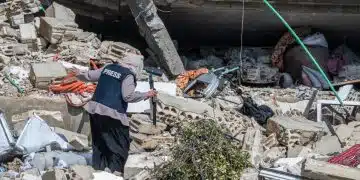
Hassouna’s story unfolds within a sporting landscape facing unprecedented challenges in Gaza. Stadiums have been damaged, facilities have been rendered unusable, and athletes have found themselves caught between arrest and forced absence from training and competition.
In this climate, football becomes a space for social cohesion and a tool for rebuilding what has been broken. The Ramadan tournament was more than just a sporting event; it was an attempt to keep the flame of sports burning in an environment suffocating with pressure.
Questions of Sports Justice
Amidst this reality, the paradox is stark between the global slogans of sports and the reality experienced by players on the ground. International organizations like FIFA raise the banners of fair play and protecting the game’s values, yet the daily experiences of many athletes in conflict zones raise questions about the effectiveness of these principles when it comes to protecting players and their fundamental rights to practice sports safely.
How can sport remain a bridge between peoples when a player is deprived of his right to train and compete due to detention? And how can the spirit of the game be preserved if the stadiums themselves are vulnerable to destruction?
After the Goal
When the match ended, the most important thing wasn’t the result, but the feeling Hassouna carried with him as he left the field. He had returned to what he loves, even if only through a local tournament, and even after a painful absence.
He wasn’t looking for the limelight or continental titles, but something simpler: to prove to himself that imprisonment hadn’t extinguished his passion, and that the football he’d loved since childhood could still give him meaning.
Thus, between the starting whistle and the final whistle, Mustafa Hassouna wrote a new chapter in his story; a chapter that says that stadiums, no matter how tight the circumstances, remain a space wider than restrictions
Featured image via the Canary


Leave a Reply