
Over 40 and Still Working Through the Pain? UK’s Degenerative Musculoskeletal Crisis Is Being Ignored

UK’s Workforce Is Ageing, But Its Health Strategy Is not
The UK labour market is getting older, and quickly. Recent figures from the Office for National Statistics show employment rates among people aged 50-64 have risen significantly over the past decade, with more adults in their early sixties remaining economically active than at any point in recent history.
At the same time, the UK’s state pension age has increased, and ongoing cost-of-living pressures are forcing many to extend their working lives well beyond what previous generations anticipated. The reality of the ageing workforce UK is no longer a projection; it is a structural shift. Yet health policy has not kept pace.
Rates of degenerative musculoskeletal conditions rise sharply after 40, affecting bone density levels such as osteopenia, osteoporosis, and joint health integrity like osteoarthritis, affecting your mobility. According to Health and Safety Executive data, work-related musculoskeletal disorders remain one of the leading causes of work-related ill health across Britain, accounting for hundreds of thousands of cases annually.
Despite this, musculoskeletal decline is still framed as an inevitable part of ageing rather than a preventable public health priority, often conflating how osteoporosis and osteoarthritis affect bone and joint health.
Many people still find themselves asking, is osteoporosis the same as osteoarthritis and what is the difference between these two conditions?
The fact that this question remains so common highlights a broader public health information gap.
Did you know that osteoarthritis and osteoporosis are two very different conditions?
Osteoarthritis is a joint disorder. It affects the cartilage that cushions joints, causing it to wear down over time. As the joint cartilage deteriorates, the joint space narrows, which can result in pain, stiffness, and reduced mobility.
Osteoporosis, on the other hand, is a bone-density condition. It weakens bones by reducing their mineral strength, making them fragile and more likely to fracture. This happens when bone breakdown outpaces bone formation, leaving the skeleton vulnerable – often without obvious symptoms until a break occurs.
Understanding the distinction matters, especially in London’s Canary Wharf office-based workplaces and leadership environments. When decision-makers misinterpret these conditions or underestimate their impact, recovery and rehabilitation can be delayed. This may extend employee downtime, reduce productivity, and place unnecessary strain on teams. This is not about personal resilience. It is about structural neglect in a workforce expected to work longer, but not necessarily supported to stay physically capable of doing so.
Working Through Pain Has Become Normalised
In workplaces across London, persistent discomfort has become background noise. Estimates suggest millions live with chronic lower back pain UK, a condition strongly associated with both sedentary and physically demanding roles.
The Chartered Institute of Personnel and Development, in its CIPD workforce health report, highlights rising presenteeism, employees attending work despite illness.
Pain is managed, masked, or ignored. This is where the occupational health crisis quietly deepens.
Research from the Global Burden of Disease Study identifies low back pain as a leading cause of years lived with disability worldwide (GBD 2021). The World Health Organization similarly classifies musculoskeletal disorders among the top contributors to global disability (WHO, 2023).
Pain becomes normal.
Until it is not.
The NHS Bottleneck, Delayed Diagnosis, Delayed Recovery, and Increased Risk of Injury
For many Londoners, help is slow. NHS waiting lists for orthopaedic consultations and physiotherapy remain under pressure. Access to NHS musculoskeletal services varies by London boroughs, and early-stage intervention is not always timely.
Guidance from the National Institute for Health and Care Excellence (NICE, 2022) stresses early fracture-risk assessment for osteoporosis and structured management pathways. Meanwhile, Versus Arthritis has repeatedly warned that delayed intervention worsens long-term joint damage. This is not a failure of clinicians; it is a capacity issue layered onto the rising prevalence of degenerative musculoskeletal conditions.
The Economic Cost Nobody Is Properly Calculating
According to Health and Safety Executive data, lost productivity linked to work-related musculoskeletal disorders costs the UK billions annually. When combined with WHO disability projections and ONS productivity trends, the implications are stark.
An ageing workforce UK model without parallel musculoskeletal investment risks increasing early retirement, long-term sickness absence, and disability claims.
This is more than health.
It is macroeconomics.
Expert Insight – Osteoporosis After 40: The Silent Bone Loss We Can Prevent, If We Act Early
There is a significant difference between the science of osteoporosis and the practical realities of bone rebuilding and joint rehabilitation.
One truth is consistently clear: osteoporosis is not simply an inevitable feature of ageing, but a process that can be powerfully influenced when understood early enough.
So, what truly happens to our bone health after the age of 40?
Jazz Alessi’s London-best osteoporosis exercise expert insight explains why bone loss begins silently, why it so often goes unnoticed, and why targeted, structured intervention is not cosmetic – it is clinically protective.
“Bone loss accelerates silently after 40, particularly in post-menopausal women, but also in men with declining hormonal profiles. Peak bone mass achieved by the early thirties determines fracture resilience decades later. Stress fractures and vertebral compression fractures can often go undiagnosed, and sarcopenia compounds skeletal fragility,” said Jazz Alessi, the founder of Personal Training Master, head of the Osteoporosis Rehabilitation Division and the creator of The Spine Method in London.

Safe mechanical loading – and safe is the key word here – stimulates osteoblast activity through mechanotransduction, which is your cells’ load-signalling pathway; however, insufficient axial loading reduces the bone remodelling stimulus, whilst just a bit more load could cause a bone fracture. Customised muscle and joint preparation, followed by assessment-based resistance training, improves your bone mineral density, enhances neuromuscular coordination, and reduces the risk of falls – one of the main causes of bone fractures. Early structured intervention is clinically protective, not cosmetic,” Jazz Alessi continues.
Prevention Exists, But Access and Investment Do Not Match the Scale
The bone protecting evidence is not ambiguous.
Early, structured intervention, particularly customised resistance training, balance work and supervised loading protocols, has been shown to improve bone mineral density, reduce fall risk, and slow functional decline in midlife adults (Harvard Medical School, 2022; NICE, 2022).
The Mayo Clinic also highlights strength training and weight-bearing exercise as central to both osteoporosis prevention and osteoarthritis symptom management.
Prevention, in other words, is clinically supported.
What remains inconsistent is not always being aware of interventional choices against osteoporosis progression or having access to long-term experienced professionals who understand how to handle such challenges, but this is not always the case.
Michael, a London-based client, reflects: “I did not realise how advanced my bone loss was until Jazz explained the scan results in plain English. It was not about aesthetics; it was about preventing fractures.”
Tiffany adds, “What stood out was how technical, yet practical, Jazz was. He connected the science to my daily routine in a way my previous rehab never did.”
Real-World Impact: Patient Experiences After Structured Intervention
Behind the data and policy discussions are individuals who have lived through persistent back or joint pain, and who have experienced measurable change following structured, evidence-led rehabilitation.
Jan, a London-based professional dealing with long-standing spinal instability and long term severe back pain, described the shift not in vague terms, but in quantifiable outcomes:
“The inconsistencies and body asymmetries diminished by 85-90 per cent very quickly. Pain also diminished to a final reduction of 85-90 per cent. My work is better because of this. I could potentially take up a new sport, for example. Jazz commitment, knowledge, and care are surely unsurpassable. I would recommend Jazz without reservation.”
Jan’s experience reflects what research consistently shows: strengthening the right muscles, correcting biomechanical asymmetries and restoring spinal stability can significantly reduce functional pain and improve occupational performance, and in a safe way this helps you increase the load on your bones, helping you to fight osteopenia and osteoporosis.
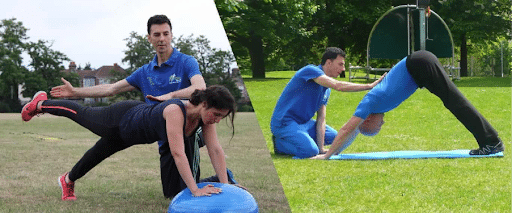
Jessica’s transformation illustrates a broader systemic effect of properly structured training, an aesthetic change, mental and physiological restoration:
“My happiness level has increased 200%. My upper body endurance has increased between 200 to 300 %. I have more energy, reduced back pain, feel stronger, fitter, faster, healthier, and feel that I have a way forward that is sustainable and a lifestyle change rather than a quick win or fad. Jazz is very motivating. My muscle tone has increased by about 200%. Sprinting – I am now 300% faster.”
What stands out in both accounts is correct medical history taking and assessments, laser sharp exercise customisations and implementations, and sustainability over the long term.
These percentages are not short-term gains, but dramatic functional improvements aligned with what long-term musculoskeletal research recommends: customised loading, structural correction, and safe and measurable adaptation.
In a national conversation often dominated by waiting lists and delayed intervention, these lived experiences offer a glimpse into what early, structured, technically informed rehabilitation can look like in practice.
Occupational health frameworks in Greater London and the UK often focus on reactive management, sick notes, short-term physiotherapy referrals, and modified duties, rather than early-stage effective prevention.
Yet as the ageing workforce UK expands, proactive musculoskeletal strategies should be embedded into London’s workplace design.
Structured London ergonomic audits, resistance-based training programmes, and fall-prevention education could all reduce long-term disability risk.
So, where are you living in London?
As the technology creates opportunities and access which were not there before, it does not matter if you live in The City, near Liverpool Stock Exchange, Central or North London, Limehouse harbour or in the heart of Canary Wharf, London’s financial centre.
Canary Wharf employers and The City are beginning to explore integrated osteoporosis prevention and support models.
For example, if you live in Canary Wharf or anywhere in London, forward-thinking firms create effective osteoporosis rehab solutions and ask, how does this successful personal trainer Canary Wharf based model creates health transformations using corporate wellbeing strategies and reduce long-term injury risk?
The question itself signals a major shift, from viewing customised exercise as a perk to understanding it as a protective health infrastructure and a handy and effective anti-ageing intervention.
These preventive, customised exercise initiatives remain fragmented. Without scaled investment, the UK’s growing occupational health crisis will continue to widen, not because prevention is unavailable, but because it is unevenly prioritised.
Here are Jazz’s five evidence-based osteoporosis prevention recommendations:
Five Evidence-Based Prevention Strategies
Resistance Training
Customised bone loading stimulates your bone formation and preserves joint integrity (Harvard Medical School, 2022). 1-2-1 supervision is crucial; therefore, it reduces injury risk.
Early Screening
NICE guidelines recommends fracture risk assessment in at-risk adults over 50. Early DEXA scans identify silent osteoporosis. Osteoporosis does not happen overnight, and it can be caught earlier; proceed with DEXa screening 5-10 years earlier.
Vitamin D Optimisation
The NHS advises supplementation during the autumn and winter months to support bone health. Also, make sure you add enough calcium from natural, unprocessed foods, get a dietitian on board or a clinical nutritionist to customise and optimise your nutrition for bone health, as it will have a multifactorial effect, including improving your gut health, scaling down some inflammatory processes and slow down the ageing process.
Workplace Ergonomics
Reducing repetitive strain lowers the risk of work-related musculoskeletal disorders; therefore, core and functional training will help you protect your body structures, allowing you to take your training to the next level and move and feel decades younger.
Balance and Fall Prevention
Proprioception and multi-compound exercises reduce fall risk, particularly in over-60s populations (WHO, 2023). Balance training and maintaining abilities make it much easier to deal with an injury, plus, training helps you maintain and improve cognitive functions, and it is fun.
Conclusion: What Happens If We Continue to Ignore It?
If current trends continue, rising disability claims, expanding NHS strain, and declining productivity will follow.
An ageing workforce in the UK without an integrated musculoskeletal strategy risks intergenerational workforce pressure and economic fragility.
The science is clear.
The question is whether policy, employers, and health systems respond in time, whilst we must be prepared to take a proactive role and act early and in a timely manner.


Comments 3
Leave a Reply









Behind this apparently science-based account of a health problem is an attack on the NHS as a sufficient and necessary provider of healthcare. The conclusion must be that profit based healthcare must be the solution. More shame on this site.
Another ad pretending to be a news story. I wondered why it kept going on about London. Stealth ads constantly on the Canary these days is why I usually don’t bother visiting.
My professional tennis coach, who studied at LSE and was part of the LSE Athletics Division, spoke highly of Jazz, who was, at the time, his nutrition and sports exercise rehabilitation tutor.
Timely article, as my auntie has severe osteoporosis, and I wasn’t aware of the NICE study mentioned, which is considered the gold standard in the UK and is explained in the article. I tracked down the study myself, and it’s a great article showing what’s possible when a professional does things properly.
My coach mentioned Jazz’s work about six or seven years ago, and a couple of years back I came across a video of him lecturing at CMS Cameron McKenna. I wish there were more professionals like him.