Starmer has banned kids from social media instead of reining in capitalist big tech

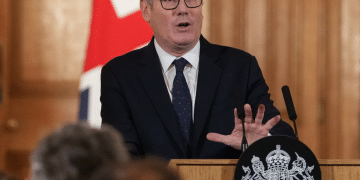
PM Keir Starmer has announced a social media ban for under-16s which will prevent access to apps like Snapchat, TikTok, YouTube, Instagram, Facebook, and X.
Taking inspiration from Australia, the UK will introduce a similar ban to take effect from Spring 2027. However, the government will go further by restricting livestream and ‘stranger communication’ for children including on gaming sites.
In his address, Starmer stated:
All I’ve ever wanted for my own children, hand on heart, is for them to be happy and for them to be safe, I think that’s what any parent wants.
BREAKING: Prime Minister Sir Keir Starmer has announced a social media ban for under-16s.
Live updates: https://t.co/Jxi67uC5Qk pic.twitter.com/VnIFMyjAhs
— Sky News (@SkyNews) June 15, 2026
However, this follows a pretty clear refusal from tech giants to make platforms safe and age appropriate. Instead, Starmer is simply kicking a dangerous can up the hill that will then hit young people further down the line.
After all, the problem is unregulated, unyielding tech companies and unfettered capitalism – and the government appears to have chosen to go after an easier target in young people instead of holding billionaires accountable.
Starmer: ‘social media is making children unhappy’
Starmer has insisted the ban is essential as the use of social media is making children miserable. As the PM says, it has increased access for bullies and intimidating behaviour, whilst also making it easier for strangers to contact young people through gaming platforms and other social media.
Therefore, some parents have welcomed the ban, with the bereaved mother of Esther Ghey stating:
I’m so glad now that this announcement has been made.
Adding:
Another thing that I’m really happy about it the government is investing in after-school clubs, because we can’t just take things away from children.
At a time when many children have too few opportunities to build friendships and develop social skills, increased funding for after-school clubs is a welcome development. Giving young people more places to connect, learn and belong can only be a good thing.
Nonetheless, this policy wouldn’t be necessary if we didn’t have capitalistic, self-interested tech bros profiting from the misery which social media fosters and breeds.
Isaac, a young boy from Wythenshaw who will be affected by the ban, seems to get it far more than the corrupted politicians in Westminster, telling the BBC:
Annoyed and disappointed in this decision, because they’re not trying to make it better or safer – instead they are gonna wipe it out completely.
I think there should be more restriction and parental guidance on the accounts, but not a ban.
Risky strategy
Meanwhile, Jim Gamble, founding chief exec of the Child Exploitation and Online Protection Center, believes the policy won’t even work and will just push children to “darker corners” of the internet:
Many (Australians) bypassed restrictions using virtual private networks. They circumvented them by submitting fake IDs or altering their appearance to trick AI (artificial intelligence) age estimation.
.. If you actually look at the statistics, it’s a double-edged sword because the internet does as much good.
For isolated, alienated children, for children with neurodiversity, with children exploring different aspects of their young lives, it’s a space and place where they can build positive networks.
But this ban is merely addressing a symptom of a far greater threat facing our society and going further, it may even provide a backdoor for pushing through digital IDs on the general public.
So, what appears to be a protection measure for young people could in practice increase the access to private data for tech companies through age verification checks which are reported to include bank checks and email surveillance.
Fourth, other age checks cited like bank checks and email surveillance are literally insane 🤷♀️
Far from “reining in Big Tech”, this is a gift to them – a huge transfer of power and data from the public to the tech companies, wrapped in child safety branding.
— Silkie Carlo (@silkiecarlo) June 14, 2026
Labour chooses to ban the children, not the business model
Don’t get me wrong: stronger restrictions on social media use by young people have become increasingly necessary given how toxic, abusive, and harmful many platforms have proven to be. But the repeated failure of tech companies to address these problems meaningfully means the dangers will not simply disappear because a ban is introduced.
Harmful content, disinformation, and online radicalisation will continue to exist, and young people will often find ways around restrictions. It is important to note, this policy has not been successful in Australia – a whopping 70% of parents in Australia have reported that their children are still on banned platforms – which hardly suggests this will have any impact on children’s safety.
More importantly, we have already seen how algorithms amplify division, anger, and extremism across the UK, influencing adults as well as children. The challenge is therefore not just who uses social media, but how these platforms are designed, regulated, and incentivised. If we fail to address the business models that reward outrage and hate, we risk treating the symptoms while leaving the underlying causes untouched.
After all, we’ve seen these platforms profit from some of the most harmful and abusive content imaginable, and when every click is a source of revenue, even material that exploits children can become part of the business model.
That isn’t just a moderation failure. It’s the predictable and futile result of putting obscene profit ahead of public safety.
Even more concerning is the fact that this ban will drive users ‘underground’ which will work to reduce transparency for adults. If children respond to social media bans with VPN workarounds, the result may be the worst of both worlds: the risks remain, while parental oversight and awareness vanish.
Rather than treating children as the problem, we should be forcing tech giants to make their platforms safer. If we change the business model, introduce real safeguards, the internet becomes safer for everyone – not just young people.
What are they really after?
There is every chance this amounts to little more than virtue-signalling: a tokenistic gesture to “protect children” while changing sweet naff all about the very systems causing great harm in the first place.
After all, this crisis should really be a watershed moment to finally confront the cynical, corrosive influence that social media platforms and their billionaire owners exert over society. Tackling the business models, algorithms, and incentives that drive abuse would create a safer environment not just for children, but for adults too.
Nevertheless, that is not what the government is pursuing. Instead, critics have argued that this is a manipulative way of pushing through digital ID across the country, ramping up digital surveillance of British citizens and reducing our right to privacy.
In practice, horrifyingly, this could actually wind up handing the already immensely powerful tech giants more access and control over our data, creating an even more oppressive environment for adults – whilst leaving young people unprepared for the fallout when they ‘regain access’.
Featured image via Getty/Carlos Jasso
Leave a Reply