
It’s not just Starmer – other European countries are now using foreign aid money on defence

European nations are facing a critical crossroads as their increasing military budgets are redirected away from vital foreign aid and climate assistance meant for developing countries. This shift is resulting in significant implications not only for the Global South but also for Europe itself.
Europe: cutting foreign aid to drop more bombs
As conflicts and security concerns take centre stage, billions of euros that were once allocated for fighting climate crises—such as floods, droughts, and cyclones—are being reassigned to bolster military efforts. This redirection has the potential to exacerbate inflation in Europe, lead to an increase in refugees, and undermine the continent’s international standing.
Gareth Redmond-King, head of international programs at the Energy and Climate Intelligence Unit, highlighted the interconnectedness between European nations and those in the Global South.
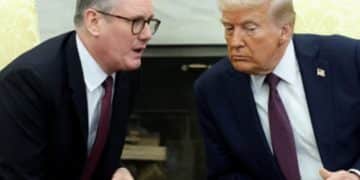
Speaking to Bloomberg, he remarked “we are mutually dependent on these countries.” This reality is starkly reflected in recent decisions taken by various European nations. The UK, under Labour Party PM Keir Starmer, has announced a cut of £6 billion (around $7.6 billion) in foreign aid funding to accommodate rising military expenditures.
Germany plans to reduce its development finance by nearly $1 billion, while the Netherlands has proposed cuts totalling €2.4 billion (approximately $2.5 billion). Similar measures are being put in place by Finland, Sweden, and Switzerland.
The implications of these cuts are worrying.
Stark warnings
Redmond-King suggested that reduced aid would likely lead to higher prices on essential commodities like coffee, cocoa, and bananas, as fewer protections against climate disasters leave exporting countries vulnerable. The UK, for instance, imports around two-fifths of its food, with half sourced from regions increasingly impacted by climate change, including worsening heat waves and floods.
David Miliband, former UK foreign secretary and now CEO of the International Rescue Committee, articulated the long-term consequences of these financial decisions. He described the UK’s withdrawal from development finance as “a blow to Britain’s proud reputation as a global humanitarian and development leader.”
His concerns are echoed by sentiment within the UK government itself, as Anneliese Dodds, the nation’s minister for international development, resigned in protest against the funding cuts.
Redmond-King also warned that withdrawing climate aid risks allowing nations perceived as hostile by Europe to increase their influence in strategically vital regions. He highlighted the irony that while there is a pressing need to increase defense spending, cutting climate aid could destabilise developing countries in ways that might encourage undesirable foreign influence.
Foreign aid cuts fly in the face of global priorities
The loosening of development budgets comes at a particularly troubling time, positioned just three months after the COP29 summit in Baku, where wealthier nations had made a commitment of $300 billion annually in climate aid to support poorer nations. This new military-focused budgetary framework jeopardises those pledges, complicating future efforts to fulfil these commitments.
Now, overall Europe is set to increase its military budgets to over £320bn.
Moreover, the financial markets are responding to this change in focus. The S&P Global Clean Energy Index has seen a staggering 40% decline in value since the onset of hostilities following Russia’s invasion of Ukraine in February 2022, juxtaposed with a 64% increase in the S&P Global 1200 Aerospace and Defense Index during the same timeframe.
The shift of financial resources from climate crisis aid to military spending is poised to deepen existing crises in the Global South while further complicating Europe’s own challenges—marking a significant moment in global governance and resource allocation.
Featured image via the Canary


Comments 1
Leave a Reply








The west will lose it’s soft power and the poorer countries will turn to China who are already preferred as development partners by many African countries.
Brics will increasingly powerful and the west will continue it’s decline – assuming it doesn’t blow us all up with it’s mania for war.