Disney’s “Hexed” and the sanitisation of the ostracised

Disney’s teasing trailer for its upcoming original film “Hexed”, without further context, seems to showcase a repeated trope within Disney’s catalogue of presenting themes of ostracisation while remaining as palatable as possible to its audience. Despite the film having not come out yet, it is already being seen by some as evidence of the studio’s lack of inherent need to strip the politics and real-life experiences out of social outcasting.
The palatable outcast
On the 16th of June, Disney released its first teaser for their November animated film “Hexed”. Although initially I was intrigued by the teaser, the internet at large was not impressed.
He did it 🥹👏 https://t.co/4OPI0FbnTn pic.twitter.com/BxY8KVfutV
— Papaya (@PapayaRaya_808) June 17, 2026
Within a mere week of the teaser’s release, the film has already faced overwhelming criticism for seeming soulless and unoriginal. And though people have attributed this first impression to several different reasons, I think it simply lies in the audience picking up on how Disney has been conducting itself for years now.
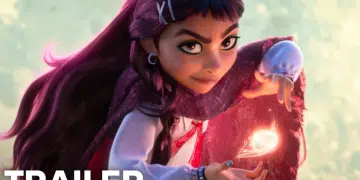
When the trailer begins, we are introduced to our main character through the first line “my whole life I felt like there was something wrong with me”. This immediately gives the film the impression of a theme of lifelong marginalisation and not fitting in. This is a frequently visited narrative trope and arc found in more than just movies. The directors of the film themselves have expressed that this was their intent with her character. The issue, however, lies when after showing judgmental and callous looks from the people around her, the camera pans up to show our outcast protagonist. A teenager with painted nails, purple dyed hair and a small braid customized with leaves.
we need a compilation of these movie intros where its like “i’m way too different from the others they all hate me” and it shows us the most normal person design you’ve ever seen https://t.co/xxxWFHshLa
— 🩷 boss of patzupan 🩷 (@floofinian) June 16, 2026
Contrasting the presentation of the teaser, our main character’s appearance doesn’t look particularly polarizing. In both appearance and attitude, she resembles a depiction of a teenage girl that many of the audience are familiar with and accustomed to. A large part of Hexed’s teaser backlash can be rooted in the recognition that the main character’s design is not only seen as normal but also presents as an incredibly watered-down imitation of an alternative fashion sense. That the movie is presenting marginalisation without anything that would actually constitute marginalisation in the real world.
Stripping the politics out of marginalisation
It’s clear that the protagonist “Billie” is supposed to replicate the aesthetics of being outcasted — but also that Disney as a corporation won’t represent a character actually outside of societal standards. This is given added depth with the knowledge that almost just a year ago, the main character of this film was supposed to be a boy.
When Disney first announced and revealed the concept art of Hexed a year ago, the main character was described as a social outcast young boy. While last-minute production changes are nothing new for Disney’s animated films, there are unanswered questions on why this decision was made. However, if you consider the concept that the original male protagonist would have had a similar depiction to this current female counterpart, you get a hint of the motivation behind that decision.
Hexed could have been something else
Even if the similarities to the final teen girl protagonist were minimal, a depiction of a socially outcasted young boy due to his presentation and personality would have been something else. Not only would it be rather unique for a mainstream animated film, but it would also present a different reality to the narrow way boys are supposed to present and behave. But that, along with how our final protagonist, turned out reveals a key nature of how Disney wants its character to be portrayed. That when they depict marginalisation they must strip the real biases and politics from that ostracisation. Disney apparently can never depict a male character with a gender-nonconforming presentation or attitude, similarly it cannot depict an ostracised teenage girl actually performing outside of societal norms.
The narrative of ostracisation is used for its aesthetics but it is then completely removed from real world experiences and causes. Resulting in a shallow and empty message of acceptance
And this reality becomes clearer when you acknowledge that this has been done blatantly before.
Elio and the unacceptable outcasts
The more blatant and egregious example of Disney stripping stories of marginalisation from their political and personal core, other than Hexed, is Elio.
Elio is an animated film released by Disney Pixar last year and notably had a massive creative overhaul during its production. Infamously, the film was originally supposed to be directed by Adrian Molina, an openly gay filmmaker. The film’s story was initially about a young boy outcasted by his peers due to his more feminine behaviour, inspired by Molina’s own experience as a queer man. The film was going to be about him accepting himself and reaching an understanding with his previously apprehensive guardian.
In response, Disney Pixar did not only slap the movie on the margins with barely any advertising, but pushed Molina out of the project and proceeded to remove the queer and marginalised themes from the movie. Changing Elio into a more generic protagonist outcasted for his love of aliens and awkward nature. Despite being an autistic woman who’s usually able to resonate with feeling isolated due to awkward behaviour, it is obvious to me that Elio’s depiction in his movie is hollow and completely lacking any real experiences driving it. Pixar chief creative officer Pete Docter afterwards even proceeded to mock his LGBT employees’ concerns by stating, “We’re making a movie, not hundreds of millions of dollars of therapy.”
Elio is not only an example of how Disney strips these outcast stories of their real world meaning and experience. It is also an example of how they actively steal stories of ostracisation from actually marginalised groups for profit.
Capitalism leaves no room for sincerity
Ultimately, the truth is that this sanitisation of the concept of being outcasted and marginalised within the Walt Disney company comes naturally to the corporation. Disney is not just a multi-billion-dollar entertainment empire, but one born out of a capitalistic need. Capitalism reduces everything into a commodity for profit. Because of this Disney can only see marginalisation as a commercial aesthetic to commodify — instead of a real experience to relate to. These experiences are treated not as belonging to real people and communities, but instead as an asset for the taking — to be butchered and changed for maximising profit. These stories of ostracisation that are inherently made to be used for marketing appeal. They will be thrown away when they are no longer seen as valuable.
The most clear example of this was the dismissal and, later regretted, cancellation of the popular Disney show The Owl House (frequently compared to Hexed).
Yeah I’m sorry man this is literally just Owl House if Luz already had powers this is actually kinda shameless lmao https://t.co/di4mU0gPn3
— 🕷️Smart Alec🕸️ (@_TheSmartAlec1) June 16, 2026
The Owl House was a show about a social outcast teen teleported to a magical world (sound familiar?). The protagonist was a queer neurodivergent Latina girl who, not only gains self-acceptance during her journey, but also battles against a religious fundamentalist emperor. A story that actually substantially pushed against the systemic status quo. The series was abruptly cancelled during its second season under claim that, “It didn’t fit the Disney brand”.
Hexed — It’s Disney after all
Conclusively, Hexed hasn’t been released yet and it may stand to subvert all expectations. However, its teaser does nothing but draw attention to the fact that Disney, as a corporation born out of a colonial and capitalist appetite, is incapable of truly creating stories of ostracisation without sanitising it for profit. Disney can’t create stories about those who don’t fit systemic standards because it, as a company, exists to appeal — and essentially to conform.
True outcasts have no place.
Featured image via Youtube

Leave a Reply