
• Donate
  • Login
Thursday, June 25, 2026
  • Login
  • Register
Canary
Cart / £0.00

No products in the basket.

MEDIA THAT DISRUPTS
  • UK
  • Global
  • Opinion
  • Skwawkbox
  • Manage Subscription
  • Support
  • Features
    • Health
    • Environment
    • Science
    • Feature
    • Sport & Gaming
    • Lifestyle
    • Tech
    • Business
    • Money
    • Travel
    • Property
    • Food
    • Media
  • SHOP
No Result
View All Result
MANAGE SUBSCRIPTION
SUPPORT
  • UK
  • Global
  • Opinion
  • Skwawkbox
  • Manage Subscription
  • Support
  • Features
    • Health
    • Environment
    • Science
    • Feature
    • Sport & Gaming
    • Lifestyle
    • Tech
    • Business
    • Money
    • Travel
    • Property
    • Food
    • Media
  • SHOP
No Result
View All Result
Canary
No Result
View All Result
  • Editorial
  • Explainer
  • Global
  • Opinion
  • Environment
  • Feature
  • Food
  • Health
  • Science
  • Skwawkbox
  • UK

Blunted? Even the Wall Street Journal admits the US’s favourite weapon is rusting

Nandita Lal by Nandita Lal
25 June 2026
in Opinion
Reading Time: 4 mins read
162 10
A A
0
Home Opinion
Share on FacebookShare on TwitterShare on BlueskyShare via WhatsAppShare via TelegramShare on Threads

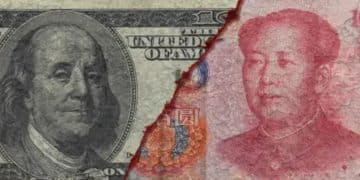
The Wall Street Journal’s (WSJ) latest feature on how American sanctions on Iran failed because China built a yuan-powered workaround will be a difficult read for Atlanticists.

China has built up international trade in the yuan, giving Iran and Russia a way to evade sanctions https://t.co/EviGCVtlXW

— The Wall Street Journal (@WSJ) June 24, 2026

The piece falls shy of praising China’s financial system, which it says is aimed at weakening Washington’s power to dictate world affairs.

The failure of the US’s Economic Fury is explained by WSJ as:

“…… in late April when the U.S. escalated its “Economic Fury” campaign against Iran, sanctioning a major Chinese refinery it said bought billions of dollars’ worth of Iranian oil. The refiner, Hengli Petrochemical, said its supplier had guaranteed the oil wasn’t Iranian.

But it also put the U.S. on notice. Future oil purchases, Hengli said, would be settled in yuan instead of U.S. dollars, the energy market’s main currency—making it harder for outsiders to track the flows.”

China defended Hengli’s rights, too. It said that “illicit unilateral sanctions that have no basis in international law,” adding that it “firmly” defended the lawful rights and interests of Chinese companies.

How they did it

The WSJ details how Iran transacted with China using China’s financial architecture, which relies on several mechanisms: Chuxin, special-purpose vehicles, mBridge, and CIPS.

Chuxin is an entity in which yuan payments from Chinese buyers (of Iranian oil) are parked rather than sent directly to Iran. The money is then passed to Chinese contractors working on Iranian infrastructure projects like airports and refineries.

Special-purpose vehicles shuffle yuan to Chinese exporters, who ship car parts and other goods back to Iran in exchange for the oil.

mBridge is a platform launched by China, the UAE, Thailand, and Hong Kong that lets central banks settle payments directly using blockchain, with no U.S. bank touching the transaction. All of this runs on CIPS, China’s alternative to the SWIFT messaging network, which the U.S. can’t easily monitor. 

The same yuan playbook, applied to Russia

The WSJ also reports that a similar pattern has played out with Russia since its war in Ukraine began in February 2022. After the U.S. tightened sanctions, more Russian oil exports and other trade with China were settled in yuan.

Today, Russian officials say more than 90% of trade between Russia and China is settled in yuan and Russian rubles. For comparison, the yuan was used in just 2% of Russian trade in February 2022.

Even Trump admits it

In a separate exchange with Fox News on June 17, 2026, Trump was asked about the difference between giving Iran U.S. dollars and simply unfreezing their frozen assets.

He responded:

We have taken a lot of their money… and we froze it. At a certain point in time, I guess we’re going to have to give it back. You know, if we didn’t give it back nobody would ever invest in the dollar again. If you do that, you really don’t have a system.

BREAKING: @pdoocy presses President Trump on what the difference between giving Iran U.S. dollars and unfreezing U.S. dollars:

“We have taken a lot of their money… and we froze it. At a certain point in time, I guess we’re going to have to give it back. You know, if we didn’t… pic.twitter.com/TcrtA5hz6d

— Fox News (@FoxNews) June 17, 2026

Trump’s point, while rambling, shows he knows that trust in the dollar is falling as the US government has prolifically used sanctions to punish nations not following its rules.

More clearly, he is telling Fox News that if the U.S. makes a habit of seizing and keeping foreign assets, confidence in the dollar erodes. No one will hold dollars or invest in US Treasuries if they fear their assets could be frozen or taken away.

The WSJ has previously reported that some of Iran’s frozen assets date back to the 1979 revolution, but most are more recent payments for oil sales to China, India, South Korea, and Japan, money that got stuck when Trump withdrew from the nuclear accord in 2018.

Estimates vary, but Tehran says it has at least $100 billion frozen abroad, with an initial $24 billion being the priority to unblock.

In conclusion, even Trump and WSJ seem to know the game has changed.

Featured image via the Canary
Tags: ChinaeconomicsUS
Share128Tweet80ShareSendShareShare
Previous Post

Scousers gather Friday against workplace sexual harassment

Leave a Reply Cancel reply

Your email address will not be published. Required fields are marked *

Yuan
Opinion

Blunted? Even the Wall Street Journal admits the US’s favourite weapon is rusting

by Nandita Lal
25 June 2026
Sexual harassment
Skwawkbox

Scousers gather Friday against workplace sexual harassment

by Skwawkbox
25 June 2026
Tommy Robinson and Karl Stefanovic
Trending

Tommy Robinson puff piece scoured from web following backlash

by Willem Moore
25 June 2026
Andy Burnham and James Purnell
Analysis

Burnham hands cruel ex-DWP Minister the keys to No. 10

by Rachel Charlton-Dailey
25 June 2026
Image from Palestine protests in London. A large crowd with many Palestinian flags and placards
Analysis

The system wants you to feel despair

by Yanar Alkayat
25 June 2026

The Canary
PO Box 71199
LONDON
SE20 9EX

Canary Media Ltd – registered in England. Company registration number 09788095.

For guest posting, contact [email protected]

For other enquiries, contact: [email protected]

Complaints and Corrections

About the Canary

Meet the Team

© Canary Media Ltd 2026, all rights reserved | Website by Monster | Hosted by Krystal | Privacy Settings

Ok

Create New Account!

Fill the forms below to register

All fields are required. Log In

Retrieve your password

Please enter your username or email address to reset your password.

Log In
  • UK
  • Global
  • Opinion
  • Skwawkbox
  • Manage Subscription
  • Support
  • Features
    • Health
    • Environment
    • Science
    • Feature
    • Sport & Gaming
    • Lifestyle
    • Tech
    • Business
    • Money
    • Travel
    • Property
    • Food
    • Media
  • SHOP
  • Login
  • Sign Up
  • Cart