Why was Bosnian support for Palestine so passionate during the World Cup?

The sight of Bosnian fans at the World Cup raising Palestinian flags, chanting for Gaza, and showing solidarity in the stands and on American streets was more than just sympathy for a people enduring a cruel war. Rather, it seemed like a retrieval of a personal and collective memory that has not left them for three decades.
While millions of fans around the world were watching what was happening in Gaza from afar, many Bosnians were reliving their own lives. They were not just spectators; they saw a part of their past in every image.
Every scene from Gaza brings back to their minds the siege of Sarajevo, the killing, the displacement, the destroyed homes, the separated families, and the long wait in the face of the world’s silence. That is why they were cheering for Palestine as if they were cheering for themselves.
The Siege of Sarajevo
It is difficult to understand the Bosnian popular stance on Palestine without returning to the summer of 1995, when the city of Srebrenica witnessed one of the most horrific crimes in Europe since the Second World War. Over eight thousand Bosnian men and boys were killed in a few days, a crime recognized by international courts as genocide.
However, Srebrenica was only the bloodiest chapter in a war defined by years of siege, bombardment, and displacement. This included the Siege of Sarajevo, which lasted nearly four years, making it the longest siege of a capital in modern history.
That wound has not healed even today, which is why every mention of genocide or forced displacement has become a personal issue for Bosnians. They know what it means for cities to turn into rubble, for children to live under bombardment, and for civilians to await the end of a never-ending war. Only those who have been burned know the pain of the wound.
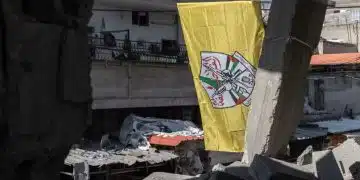
Bosnians see the destroyed buildings in Gaza, they remember the structures that fell in Sarajevo. When they see families leaving their homes, they recall the convoys of displacement their country knew. When they see children under bombardment, they remember an entire generation that lived through war before knowing what normal life meant.
This is why Palestine does not seem like an external issue to many of them, but rather an extension of an experience they lived through in every detail. This is also why their solidarity was so fervent, because memory needs no explanation.
World Cup — Dzeko recalls the trauma
This memory is inseparable from the Bosnian national team stars themselves. The team’s captain, Edin Džeko, grew up during the Siege of Sarajevo and lived the war years as a child. He miraculously escaped death after his mother prevented him one day from going to play football in a field that was bombed a few minutes later.
Džeko later grew up to become one of Bosnia’s greatest players, but he has spoken on more than one occasion about his childhood shaped by war and the days when air raid sirens were part of daily life. When he leads his national team today, he also carries the memory of an entire generation that grew up amidst destruction.
The fans who filled the streets of the United States during the World Cup were not just supporters who came to cheer for their team. A large part of the Bosnian community in the United States, Canada, and Europe are members of the diaspora, or from families who were forced to leave their country during the war in the 1990s.
They carry stories of refuge and know what it means to start life anew in a faraway country. That is why the presence of Palestine in their chants was an extension of a family memory that is still present. It is difficult for those who have tasted the bitterness of displacement to stand by and watch the displacement of others.
They know the price of silence
Everything we saw from the Bosnian fans at the World Cup came from a people who know the price of international silence. They know what it means for victims to wait for the world to intervene, and for it not to come, and for tragedies to turn into numbers on news bulletins.
That is why their solidarity with Palestine was not surprising; rather, it seemed like a natural stance for a people who see something of their history in Gaza and a part of their story in its people.
The Bosnian national team exited the World Cup, but its fans gained something greater than football results. They gained the love of millions of Palestinians and Arabs, and left behind an unforgettable image. Theirs is the image of a people who did not see Palestine as a distant issue, but saw in it the memory of their homeland, an unhealed wound, and so they cheered for it as if they were cheering for themselves.
Featured image via the Canary


Leave a Reply