Interim Timms Report brands DWP PIP system “not fit for purpose”

On 9 July, social security and disability minister Stephen Timms published his interim report on the state of the Personal Independence Payment (PIP) system. The initial findings were damning, recognising that the payments were vitally necessary for disabled recipients, but ultimately “not fit for purpose”.
In large part, this failing was due to the Department for Work and Pensions (DWP)-managed assessment system. Participants branded those assessments as “dehumanising”, “soul destroying”, and “degrading”. The review also highlighted pressing concerns regarding:
whether the functional assessment and descriptors fully reflect real-life impacts, particularly for fluctuating, multiple, and less visible conditions, as well as about the consistency and transparency of decision-making and the role of supporting evidence.
PIP was never fit for purpose
The government first introduced PIP back in 2013, to help disabled and D/deaf people cope with the extra costs of living with disability. It replaced the previous Disability Living Allowance (DLA) scheme, and was intended to consider a broader range of impairments.
The review began back in July 2025, as the Canary’s Rachel Charlton-Dailey explained:
The Timms review was launched after the Labour government failed to cut PIP last summer. Thanks to a massive push back from disabled people and a Labour rebellion, the DWP had to take PIP cuts out of the welfare cuts bill. However, as a last ditch attempt to still get some cuts through and not look like a total failure, the minister for disabled people announced that there would be a consultation on PIP if MPs voted for the bill.
The review’s foreword, penned by its steering group, stated that:
We know this Review begins from a difficult place. We recognise there is a lack of trust in government amongst many disabled people. We also recognise that D/deaf and disabled people and those with long-term conditions face pressures from across wider society, whether that is being the centre of unfair public debate, struggling to access the services they need, or living with uncertainty about what support is available.
If this Review’s findings are to be accepted by disabled people and non-disabled people alike, the Review must be clear about what it has heard, honest about what remains unresolved, and serious about how disabled people’s experience shapes the work. That is why co-production is central to this Review.
Limited response time for PIP
However, there were major issues regarding this ‘co-production’ from the get-go. Back on 19 March, the DWP finally launched its call for evidence on PIP. The Canary’s Hannah Sharland explained:
The first thing that immediately stands out is that the call for evidence runs for only 10 weeks. Technically, since this isn’t a consultation, that’s not unlawful – unlike the previous Conservative government’s 8-week Work Capability Assessment (WCA) consultation.
Even so, ordinarily, the government will host these in line with its 12-week requirement around consultations. […]
Of course, it speaks volumes that the DWP is giving disabled people – some of whom will need more time to engage – even less time than the standard amount to do so.
However, in spite of these necessary limitations, the review received some 38,713 responses. The participants included D/deaf and disabled people themselves, along with advocacy organisations, clinicians and leading academics. The Canary will look more closely at these responses in the next section of our coverage, here.
The changing disability landscape
The report, when published in full later in the Autumn, will form the first comprehensive review of PIP since it was introduced 13 years ago. Since then, the landscape of disability in the UK has changed greatly, as the interim report explained:
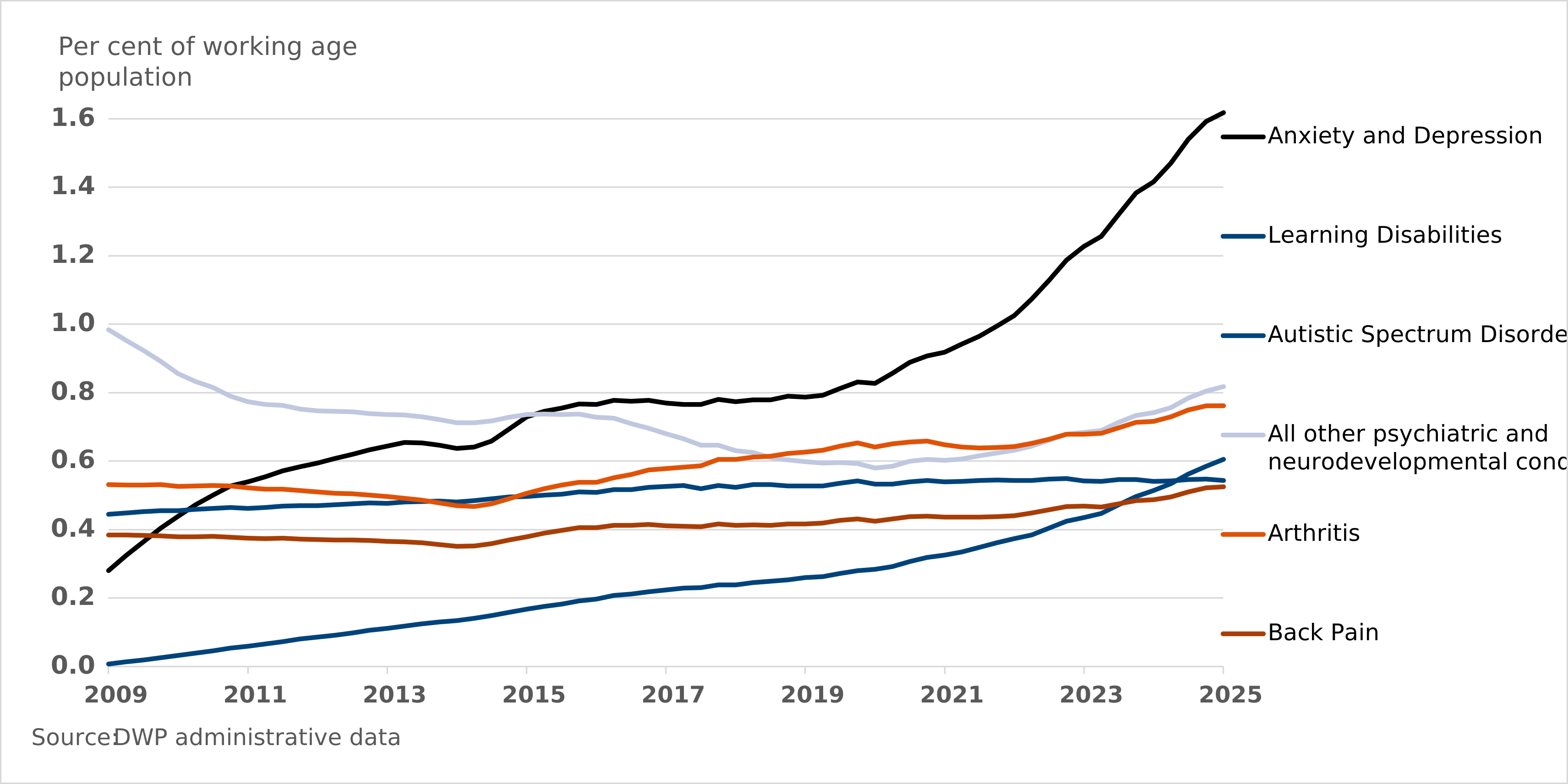
Around 10 million working-age people report living with a disability – equivalent to 24% of the working-age population, compared with under 17% in 2013/14. There have been greater increases in the prevalence of disability among young people and a rise in mental health conditions. The Review must consider how PIP can remain sustainable within fixed financial limits and support future generations.
Two things are important here: that mention of “fixed financial limits”, and the changing makeup of disabilities. In particular, the latter was related to the disabling impacts of the COVID-19 pandemic, increasing levels of chronic illness, and pressures on the NHS itself.
Penny-pinching
The Timms Report’s terms of reference set out the aim to ensure that PIP can “be there to support future generations” whilst also sticking to the Office for Budget Responsibility’s (OBR) “projections for future spending on PIP.”
The report itself stated that PIP spending is expected to rise from £15bn in 2020 to £41bn in 2031. However, it also emphasised that:
This has occurred alongside a reduction in expenditure on other working-age welfare benefits, when measured in percentage of GDP terms.
This linked to a 2025 Financial Times article, which held that the projected total for all welfare payments is around 11% percent of national yearly income. It noted that this was lower than the same figure during Cameron’s term as prime minister.
This focus on penny-pinching will always be a major problem, as Sharland previously explained:
Ensuring PIP is more accessible and inclusive won’t make the department savings. So whatever evidence disabled people provide, a fit-for-purpose disability benefit system won’t be the outcome.
As we react to the interim Timms Report, and await the finished version later in the year, cost-cutting cannot be the focus.
Even from these initial findings it’s clear that PIP isn’t fit for purpose. That purpose is vital and necessary for the benefit’s recipients, and it won’t be fixed by DWP bean-counting.
Featured image via the Canary


Leave a Reply