What did we learn from the ‘historic’ release of Royal Household financial information?

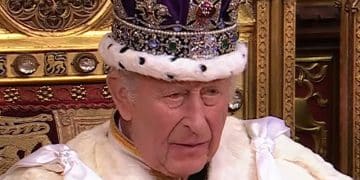
The Royal Household has shared new documents explaining aspects of their finances, amidst some fanfare that Charles would be revealing the amount of tax he has paid since becoming King.
But despite this nod towards transparency and accountability, the new information does little to confront concerns about the wealth the Royals conceal nor whether their use of public funds is justifiable.
Tax disclosures
With their first Report on Royal Finances released to the public, the Royal Household’s website now acknowledges concerns about the perceived secrecy surrounding their financial affairs. It states:
The Royal Household is committed to ensuring that public money is spent as wisely and efficiently as possible, and to making Royal finances transparent and easy to understand.
According to another statement released today:
His Majesty’s tax bill was £11.7 million in 2023-24 and £12.9 million in 2024-25.
But amidst declining public support for the monarchy, how much did the first-of-its-kind tax disclosure by a sitting UK monarch really clarify?
Property and land
The main source of income that Charles pays tax on is likely to be the Duchy of Lancaster – the portfolio of properties and land estimated to be worth nearly £700 million. In 2024-25, Charles received £25.2 million from this.
In the same time period, Prince William reportedly made a tax payment of £7.76 million. The portion of his personal income that came from Duchy of Cornwall profits – from land estimated to be worth well over £1 billion – amounted to £21.6 million.
No further detail is provided about how the tax figures are calculated. We don’t even see numbers for the total income considered taxable or totals for any deductions made from it.
The only nugget we are given to support these tax calculations is the assurance that:
His Majesty’s tax payments are reviewed by independent tax accountants.
New information?
Whilst trailed as an “extensive new Royal household report on the monarch’s finances”, the information provided yields very little new insight. There is a clearer outline of their financial governance and structure, but the only new figures that aren’t disclosed elsewhere appear to be Charles’ & William’s tax totals.
We also learned from the information released this week that the amount of money flowing from the government to the Royals via the annual Sovereign Grant will decrease in 2027 to £99.9 million.
This year, this Sovereign Grant is worth around £140 million. This has more than doubled over the past 10 years, jumping up by over £40 million alone in 2017 to fund renovations to Buckingham Palace, which are due to be completed soon. Next year will be the first time the annual Sovereign Grant has ever been reduced.
What’s still missing?
Even with these new Royal reports and tax disclosures, the extent of the Royals’ wealth remains obscure.
This would be easier to brush off were it not for rising poverty, dangerous levels of inequality, and severe strain on public services and infrastructure in the UK… on top of all the ways the Royals have benefitted from colonialism and slavery.
The UK monarch has paid income tax and capital gains tax voluntarily since 1993, when Queen Elizabeth “graciously agreed” to do so. However, Charles did not have to pay any inheritance tax when much of her vast fortune passed to him – a legal privilege only afforded to the monarchy.
In their 2023 Cost of the Crown investigation, the Guardian estimated that the King’s private wealth – including houses, cars, jewels, art and horses – amounts to around £2 billion. But there is a lot of uncertainty around this figure, and many outstanding questions.
Public or private?
The lines between what the Royals possess privately and what are (or should be) considered public assets are very blurred.
For example, critics have pointed to gifts that have clearly been acquired through their public roles, which have ended up as part of the Royals’ private collections. And unlike everyone else in the UK, their wills are kept private, making it even more difficult to decipher what they take to be their private property.
We also still don’t know how much their publicly-funded security costs.
In any case, the billions the Royals have access to make their tax payments look like a drop in the ocean. The Royal’s private postage stamp collection – valued beyond £100 million – is probably worth ten times what the monarch pays in tax each year.
Featured image via the Canary


Leave a Reply