Burnham backs ‘conditional’ welfare support in first PM interview

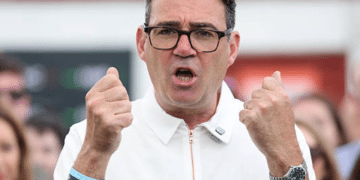
In Andy Burnham’s first interview as PM, the newly-minted Labour leader spoke about the need to “get really serious as a country” about “getting the welfare bill down”.
And how exactly does he plan to accomplish this feat? Well, Burnham claimed that he didn’t want to “blame” people on benefits, before adding:
It’s about changing the nature of the support, and making some of the support conditional upon people taking opportunities that are presented.
Implying that people on benefits having been taking the “opportunities that are presented” sounds an awful lot like blame, to us.
Blame by another name
The BBC recorded its interview on Thursday 23 July, and plans to air it this evening (Monday 27 July). Toeing the current mainstream media attack line, the show hammered the idea of phantom benefits cheats.
Presenter Laura Kuenssberg asked the PM about whether some people were claiming support they don’t need, in his opinion. Burnham replied:
Well, I wouldn’t necessarily go straight to blaming those people. What I would say is that there are people in the benefits system, young people in their 20s, who have been, I would say, quite seriously let down because the support wasn’t there for them when it should have been there.
So I don’t blame them. I don’t think the support has been there for them in the way that it should have been.
Aww, well that’s nice isn’t it? He’s singling out young people on benefits, but he’s also saying it’s not their fault. That’s some fairness and balance for you right there.
‘Changing the nature of the support’
Kuenssberg pressed the issue, asking if he planned to remove or reduce any benefits from anyone. The PM answered:
It’s about changing the nature of the support, and making some of the support conditional upon people taking opportunities that are presented.
I think it’s a good thing that the government has given guarantees of opportunities for young people. I think we need to continue down that approach. Where mental health support is needed, for instance, it’s provided in work to support people in an opportunity.
Wait a minute, we’re confused. Are people not being supported, or are they being offered opportunities and turning them down in favour of benefits?
Surely, if making benefits conditional on “taking opportunities” would make an appreciable difference, then Burnham is very much blaming benefits claimants. He’s just trying to find a ‘polite’, interview-friendly way of phrasing it (and hoping that no-one listens too closely).
Likewise, making benefits conditional on “accepting opportunities” (like a job, for example) only actually works if the likes of the Department of Work and Pensions (DWP) can be relied upon to discern whether or not somebody is fit to accept that opportunity. And, naturally, we know for a fact that we can’t rely on the DWP for fairness.
No ‘crude cuts to benefits’
Of course, there’s also another reason why the new PM is tiptoeing around the subject of benefits ‘reform’. His predecessor, Keir Starmer, faced a rebellion from his own back-benchers when he tried to implement cuts of around £5bn to welfare spending in 2025.
As such, Burnham has stated that he doesn’t plan on:
a kind of crude approach, crude cuts to benefits to get the welfare bill down.
Unfortunately, finessed, graceful cuts to benefits are still benefits cuts. He continued:
Often that just pushes people into even more crisis and then even more public spending in another part of the system.
We need a system that sets people up for success rather than pays for failure.
It’s almost as if the people claiming benefits actually need them. So, when the government slashes them, “other parts of the system” have to pay instead. For example, if people don’t have enough money to eat, suddenly hospitals are filled with patients suffering from malnutrition.
If only our shiny new prime minister had enough wherewithal to think how that might pair with his desire to “get really serious” about bringing the welfare bill down. Spoiler: the other government bills go up instead. That’s what happens when people don’t have enough money to live.
Burnham’s “way forward”
Earlier this month, the interim report from the Timms Review into Personal Independence Payments (PIP) acknowledged the benefit’s inadequacy to meet disabled people’s needs.
It also stated that PIP can punish people for coping with their disability, or use the fact that they have a job as evidence that they aren’t disabled enough to need support.
If we want to talk about welfare reform, let’s talk about welfare reform. We can start with working to create a system that truly acknowledges that people need help – and one that isn’t working actively to snatch that support away at the earliest excuse.
And yes, that does cost money. It won’t bring the benefits bill down. Of course, it may save money in other parts of the system, but in a society that actually cared about its citizens, that would be a secondary concern at best.
That’s a system that “sets people up for success”, as Burnham put it. It’s also the exact opposite of making benefits more conditional.
Featured image via the Canary
Leave a Reply