
E-coli scandal continues: superbug now found on nearly HALF of Lidl chickens tested

Lidl is under pressure after E-coli was found on nearly HALF of chickens tested by a lab. It comes amid growing concerns over the bacteria in the UK – yet the supermarket chain essentially said ‘nothing to see, here’.
Lidl chickens & E-coli: riddled with superbugs
The results of a microbiological test performed by an independent, accredited laboratory in Germany show that more than half of the fresh chicken products sold in Lidl GB contain antibiotic-resistant ‘superbugs.’
The investigation was commissioned by several animal welfare charities including Open Cages which, alongside leading antimicrobial experts, says that poor animal welfare is one of the biggest drivers of antibiotic resistance and a threat to public health.
The test examined 40 fresh chicken products sold in Lidl’s UK stores under its flagship “Birchwood British” chicken brand. The products were purchased in five different stores across the UK. The lab found:
- Multi-resistant bacteria (ESBL or MRSA) on 23 products (58%) – bacteria that no longer respond to antimicrobial treatment, making infections difficult or impossible to treat,
- Faecal bacteria E-Coli on 19 products (47.5%) – a strand of which recently caused more than 200 people in the UK to become ill, and Listeria on 12 products (30%).
Resistant bacteria can cause serious infections which might not respond to antibiotics. They can also spread antibiotic resistance to other bacteria in your body, causing resistant sicknesses in the future.
ESBL is a type of enzyme or chemical produced by some germs that most commonly infect the gut and urinary tract. MRSA is a type of bacteria that can cause serious infections and lead to painful and swollen skin, a high temperature, and difficulty breathing if it gets into the body.
As the Canary previously reported, E-coli has been spreading across the UK. It can be found in the gut and faeces of many animals like cattle and sheep, from eating undercooked meat or raw leafy vegetables – yes this includes unwashed salad leaves too.
A recent outbreak which saw over 200 people become sick was due to E-coli in a type of lettuce. As the Canary’s Nicola Jeffery previously reported, the bacteria has also been found on the London Underground and at bathing sites.
E-coli in meat – a “worrying trend”
Timothy Walsh, Professor of Medical Microbiology and Antibiotic Resistance at the University of Oxford, said:
The presence of multi-resistant bacteria in meat is a worrying trend and represents a serious public health concern. People can get ill from processing and consuming contaminated meat, and the use of human antibiotics in animal production can have a profound long-term effect on the effectiveness of antibiotics to treat human infections.
Antimicrobial resistance (AMR) occurs when bacteria mutate or acquire genes that allow them to survive exposure to antimicrobials. Over time, bacteria that are resistant to antibiotics can spread, making treatments either more difficult or entirely ineffective. This also elevates risks for surgery, C-sections, and chemotherapy.
Experts estimate that 1.27 million people worldwide died in 2019 from drug-resistant infections with a further 4.95 million dying of antibiotic-resistant associated infections. In the UK, around 58 000 people had an antibiotic-resistant infection in 2022 and 2,200 die from it every year. The scale of the issue led the World Health Organisation to classify antimicrobial resistance as one of the top 10 global public health threats.
Dangerous pathogens from poor animal welfare
According to experts like Professor Walsh, one of the major causes of resistant bacteria in chicken meat is the use of fast-growing breeds – a practice which is criticised by animal welfare charities like Open Cages.
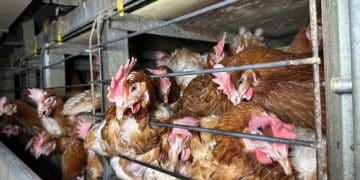
“Frankenchickens” have been selectively bred to produce a lot of meat in the shortest possible time. As a result of their fast growth, these birds have very weak immune systems which makes them prone to contracting numerous infections and diseases. Lidl chickens with E-coli is part of this. As the Canary reported, the supermarket chain has repeatedly hit the headlines over the poor conditions its suppliers keep chickens in.
Walsh said:
Poor animal welfare is one of the major catalysts for the use of antibiotics and subsequent drivers of antibiotic resistance. Improving animal welfare, such as adopting slower-growing breeds in line with the Better Chicken Commitment, can significantly reduce the need for antibiotics to be given to the birds in the first place. UK supermarkets have a responsibility and obligation to ensure that the meat sold is safe for consumption and free from antibiotic-resistant pathogens.
Lidl: nothing to see here:
In a statement, Lidl told the Times:
Food safety is a priority for our business and all products are subject to extensive quality controls throughout the supply chain. We work closely with our suppliers and a multitude of industry partners, aligning our policies with the Responsible Use of Medicines in Agriculture Alliance (Ruma) and the Food Industry Initiative on Antimicrobials (FIIA) to ensure the responsible and Ruma recommended use of antibiotics, while ensuring animal welfare remains a priority.
Our own testing shows that in the last 12 months there have been no micro-related deviations outside of legal levels, and no concerns have been raised to us by any regulatory bodies on this topic.
A way forward with the Better Chicken Commitment
The Better Chicken Commitment (BCC), a set of welfare measures designed by animal welfare specialists, prohibits the use of fast-growing breeds. Data from the Dutch broiler industry shows that slower-growing chickens require nine times fewer antibiotics. Lidl, who has recently committed to giving more space to chickens in line with one of the BCC requirements, hasn’t voiced any intention to change the breeds they sell yet.
Connor Jackson, CEO of Open Cages, explains:
For years we have asked retailers like Lidl to stop selling fast-growing chickens. These alarming new findings reveal that this is no longer only about animal welfare: we are all paying the price. According to the tests, a Lidl customer has a one in two chance of taking potentially life threatening superbugs into their homes. That’s like flipping a coin. Are we really OK with that? Is cheap meat really worth the risk to our health?
Changes in farming practices could have large-scale implications for reducing the spread of antibiotic-resistant bacteria: 73% of all antimicrobials sold globally in 2017 were for farmed animals, which makes factory farms a main driver of antibiotic resistance.
Hundreds of companies have already agreed to stop selling fast-growing chickens including M&S, Waitrose, KFC, Nando’s, all French major supermarkets and even Lidl in France, Belgium and Denmark.
Featured image via the Canary


Comments 2
Leave a Reply








For a fair assessment, how do UK Supermarkets fair in similar test? i.e. Tesco, ASDA, Sainsbury’s, Waitrose, Morrisons and Aldi.
Or is this just the UK Supermarket scaremongering against stiff competition in a drive to increase profits?
When I was young chicken was a treat because it was expensive. Supermarkets striving to drive down prices have imposed smaller and smaller margins on producers, this has forced farmers either out of business or to use more intensive production methods to the detriment of quality. The river Wye is polluted due to agricultural waste, according to the BBC “Research led by Lancaster University showed that 70% of the excess phosphate in the Wye comes from agricultural waste. An estimated 23 million chickens are produced in the river catchment every year”. It is not just our health that is put at risk by these practices but the planets as well.
There is little we can do to fight the corperate “Gods of Greed” but we can eat less meat and poultry and when we do only buy high quality ethically produced produce, avoid waste by using it all (eg boiling bones etc to make stock for soups).
Of course Governments could ensure that people had enough in their pockets so there was no need to have to buy the cheapest poorest quality produce in order to feed their families, although I can’t ever see that happening!
According to the ONS “With food, modern families spend just 15 per cent of their income on stocking up, compared with one-third in the 1950s”.