• Donate
  • Login
Monday, June 15, 2026
  • Login
  • Register
Canary
Cart / £0.00

No products in the basket.

MEDIA THAT DISRUPTS
  • UK
  • Global
  • Opinion
  • Skwawkbox
  • Manage Subscription
  • Support
  • Features
    • Health
    • Environment
    • Science
    • Feature
    • Sport & Gaming
    • Lifestyle
    • Tech
    • Business
    • Money
    • Travel
    • Property
    • Food
    • Media
  • SHOP
No Result
View All Result
MANAGE SUBSCRIPTION
SUPPORT
  • UK
  • Global
  • Opinion
  • Skwawkbox
  • Manage Subscription
  • Support
  • Features
    • Health
    • Environment
    • Science
    • Feature
    • Sport & Gaming
    • Lifestyle
    • Tech
    • Business
    • Money
    • Travel
    • Property
    • Food
    • Media
  • SHOP
No Result
View All Result
Canary
No Result
View All Result
  • Editorial
  • Explainer
  • Global
  • Opinion
  • Environment
  • Feature
  • Food
  • Health
  • Science
  • Skwawkbox
  • UK

Marine heatwaves can dramatically shift habitat for wildlife, study finds

The Canary by The Canary
5 August 2020
in Environment, Other News & Features
Reading Time: 3 mins read
169 4
A A
0
Home Other News & Features Environment
Share on FacebookShare on TwitterShare on BlueskyShare via WhatsAppShare via TelegramShare on Threads

Marine heatwaves can shift suitable habitat for sea turtles, whales and other wildlife by thousands of kilometres in the world’s oceans, research suggests.

While periods of unusually hot temperatures in part of the ocean are known to hit species which cannot move, such as corals, many creatures in the seas can relocate to find their preferred conditions.

A study by US scientists suggests the distance they might have to move to find more suitable sea temperatures can range from tens to thousands of kilometres.

This could have major impacts on wildlife and natural systems, as well as for human activities such as fishing.

Marine heatwaves can also shift ocean temperatures at similar scales to what is anticipated over the long term, with sea warming caused by the climate crisis – but in much shorter time frames, the researchers said.
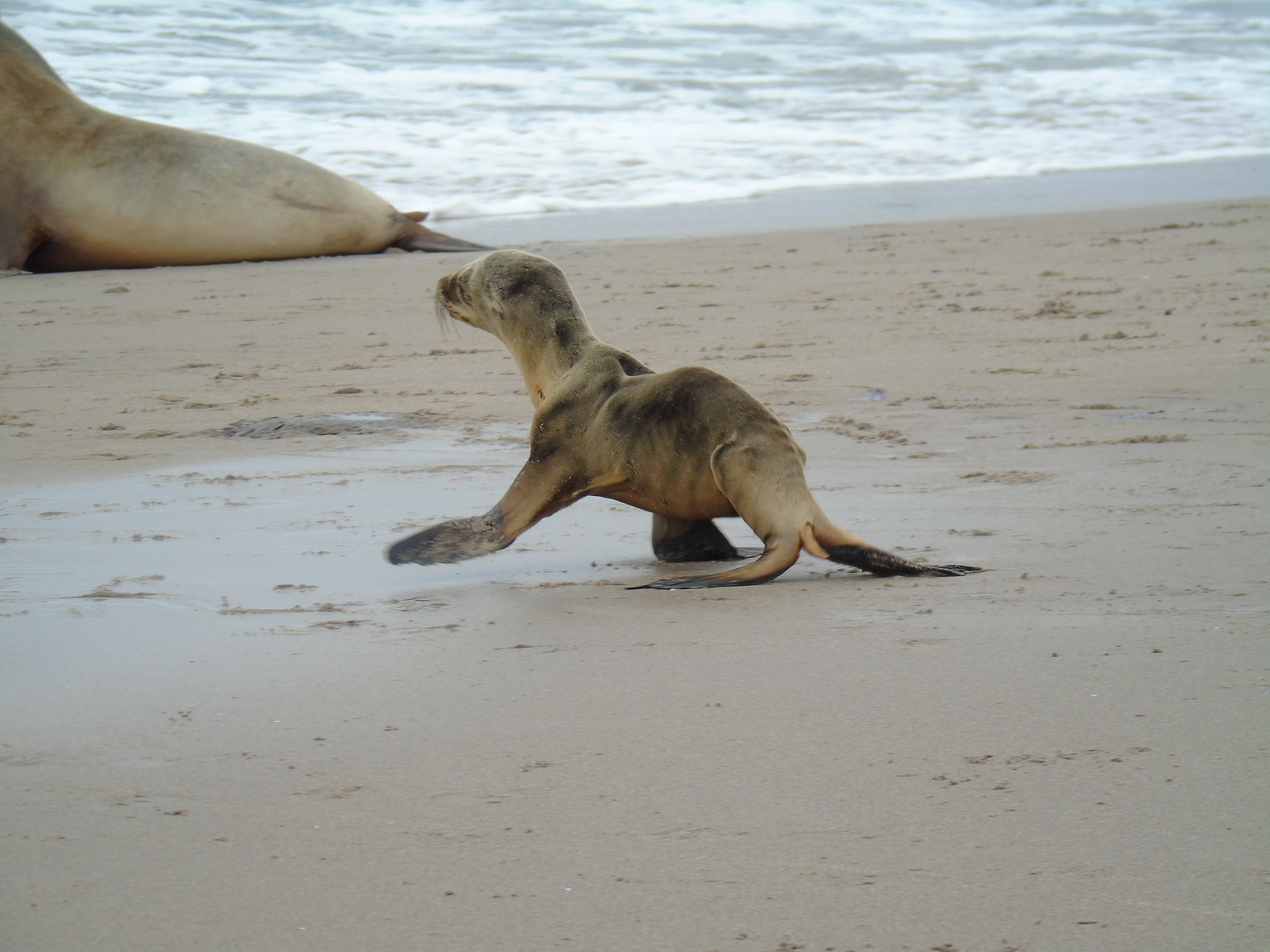
Sea lion pup
Sea lion pups were left starving after a heatwave shifted their prey (Jim Milbury/NOAA Fisheries/PA)

The study by scientists at the National Oceanic and Atmospheric Administration (Noaa), measures the shifts in sea surface temperatures or “thermal displacement”, which could cause some species to move.

If a heatwave warms an area of sea, fish, turtles, whales and other species may have to move great distances to find a more suitable habitat, depending on the rate the temperature changes across the ocean, the scientists said.

Research scientist Michael Jacox of Noaa Fisheries’ Southwest Fisheries Science Centre said: “When the environment changes, many species move.

“This research helps us understand and measure the degree of change they may be responding to.”

It can have impacts on a range of species, for example a heatwave in the Pacific in 2014-15 shifted surface temperatures more than 700 km (400 miles) along the west coast of the US.

This pushed the prey of California’s sea lions further from their breeding rookeries and left hundreds of starving pups to strand on beaches.

And in 2012 in the north-west Atlantic, a heatwave pushed commercial seafood species such as squid and flounder hundreds of miles north.

Writing in the journal Nature, the scientists said: “Modern-day marine heatwaves can induce thermal displacements comparable to those from century-scale warming trends, and while these temperature shifts do not solely dictate species distributions, they do convey the scale of potential habitat disruption.”


Tags: climate crisis
Share128Tweet80ShareSendShareShare
Previous Post

Wild camping ban introduced in part of Dartmoor after ‘unsustainable levels’ of littering and fires

Next Post

50 million face masks bought by government in £252m deal cannot be used by NHS

Next Post
Medical staff wearing PPE

50 million face masks bought by government in £252m deal cannot be used by NHS

Thousands of NHS workers to protest this weekend over pay

Thousands of NHS workers to protest this weekend over pay

UK’s first Dutch-style roundabout which prioritises cyclists opens in Cambridge

Number of families affected by benefit cap surges due to Covid-19, figures show

Number of families affected by benefit cap surges due to Covid-19, figures show

Sky News logo

Sky News quietly amends a racist tweet after huge public backlash

Leave a Reply Cancel reply

Your email address will not be published. Required fields are marked *

Chickens in an 'enriched' colony cage
News

Three in four consumers wrongly believe cage chickens are a thing of the past

by The Canary
15 June 2026
Palestine
Global

Flags, chants, and messages of solidarity: Palestine makes its presence felt at the 2026 World Cup

by Alaa Shamali
14 June 2026
Qatar
Global

How Qatar created an exceptional night at the 2026 World Cup

by Alaa Shamali
14 June 2026
Haiti
Global

Haiti coach: we must be proud of our historic performance against Scotland despite the loss

by Alaa Shamali
14 June 2026
Iran
Global

Iran destroys US radar systems in Bahrain

by HG
14 June 2026

The Canary
PO Box 71199
LONDON
SE20 9EX

Canary Media Ltd – registered in England. Company registration number 09788095.

For guest posting, contact [email protected]

For other enquiries, contact: [email protected]

Complaints and Corrections

About the Canary

Meet the Team

© Canary Media Ltd 2026, all rights reserved | Website by Monster | Hosted by Krystal | Privacy Settings

Ok

Create New Account!

Fill the forms below to register

All fields are required. Log In

Retrieve your password

Please enter your username or email address to reset your password.

Log In
  • UK
  • Global
  • Opinion
  • Skwawkbox
  • Manage Subscription
  • Support
  • Features
    • Health
    • Environment
    • Science
    • Feature
    • Sport & Gaming
    • Lifestyle
    • Tech
    • Business
    • Money
    • Travel
    • Property
    • Food
    • Media
  • SHOP
  • Login
  • Sign Up
  • Cart