
Women who alleged abuse from ICC prosecutor sidelined in fierce debate

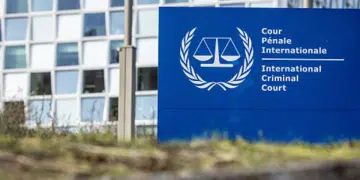
For the last two years, the international criminal court (ICC) has been struggling to navigate serious allegations levelled at its chief prosecutor, Karim Khan. Two women, who previously worked with Khan in varying capacities, came forward in 2024 with claims of sexual abuse, harassment, and coercion. He denies all allegations.
Khan was suspended whilst the ICC undertook two investigations. Both have since concluded, albeit with differing outcomes. The first found that the women’s claims had merit; the second found that the evidence was insufficient. Now, the two women have spoken publicly about their experiences, as well as addressing counter-claims that they are “state agents” looking only to discredit Khan.
It is undoubtedly a complex situation. But as various forms of power joust to maintain their crumbling legitimacy, it is the most vulnerable who continuously become fodder for inane debates where accountability is sacrificed to maintain a semblance of order. What we are confronted by, at every turn, is layer upon layer of hypocrisy.
ICC prosecutor Khan’s warrants
On the whole, reporting on the women’s allegations has been depressingly muddled. Given that the women came forward shortly after Khan applied for arrest warrants against Benjamin Netanyahu and Yoav Gallant for war crimes and crimes against humanity, many have questioned the timing of the investigations against him.
It is clear that the situation has broader implications. However, amidst all of the uncertainty one uncomfortable possibility is persistently ignored: numerous things can be true at once. The question, however, is how do we navigate these truths in order to hold the powerful to account, irrespective of who they might be trying to hold to account elsewhere?
Consider the fact that Khan did not only issue arrest warrants for Israel’s prime minister and defence minister. In fact, these warrants were secondary to those issued for three Hamas leaders – Yahya Sinwar, Mohammed Diab Ibrahim Al-Masri, and Ismail Haniyeh. If this fact has since been elided, it is because Israel murdered all three in the course of its genocidal assault on the Gaza Strip. What should have been a matter for the ICC was instead dealt with by Israeli vigilantism.
ICC handling under question
Whilst many on the left have entertained the possibility that the allegations are opportunistic, it is also entirely plausible that they followed Khan’s announcement because there was another clear hypocrisy on display. What sort of faith should anyone have an institution tasked with holding states to account for allegations of criminality if it cannot keep its own house in order?
The Trump administration only added to the chaos by announcing it would ‘disable’ the ICC and place international sanctions on Khan. In so doing, they did not mention the allegations against him, although some speculated their timing was opportunistic as well. Speaking to Al Jazeera, Professor William Schabas, of Middlesex University London, said:
Maybe they’re just feeling they’ll kick it some more, and that’ll do a death blow to it.
Trump, of course, is in no position to condemn another man for sexual abuse. Just this week, E. Jean Carroll collected over $5.6 million in damages following a civil case she brought against Trump for sexual abuse. But Trump has never let hypocrisy stop him before.
There are countless other examples of hypocrisy that we could point to. But to map out every instance of hypocrisy clouding international politics today always results in the same outcome: a regrettable ‘whataboutery’ that sidelines victims of abuse as men jostle to maintain their powerful appearances. Or, indeed, as other men jostle to debate state power whilst trampling over the experiences of women.
Wider issues
The allegations against Khan thus highlight an even more uncomfortable truth. While the left rightly disavows the ‘Epstein class’ for its skirting of accountability, this only risks deflecting from a much broader and more complex issue: abuse of power and position is not a problem exclusive to the political right. Instead, it is a problem of patriarchy overall. The title of a 1953 novel by Flannery O’Connor proves perennial: a good man is hard to find.
The degeneration of sexual abuse allegations into supposedly unprovable ‘he said, she said’ gossip makes a mockery of all processes of accountability we might hope to rely on. Such a degeneration also represents the sharpest end of a problem that affects contemporary politics as a whole. These allegations are notoriously difficult to prove in a court of law, but what isn’t difficult to prove right now?
Israel has undoubtedly perpetrated a genocide. And, multiple forms of state power – governments, monitoring bodies, the media – have all colluded to deny that genocide. And, Khan has been central in whatever piecemeal attempts exist to hold Israel to account for its atrocities.
But, his attempted prosecution of genocidal actors does not preclude him from committing abuse. We must be able to hold multiple potentially uncomfortable scenarios at once. To fail to do so is to fail to hold power to account.
Erosion of trust widespread
There are grey areas here; there is complexity. But that complexity needn’t be seen as a smokescreen. With regards to allegations of sexual abuse specifically, there is an understanding that even the appearance of misconduct warrants investigation and accountability.
That someone’s actions might even be mistaken for misconduct is enough on its own to suggest that the person or persons concerned have acted improperly. This baseline is essential because it is one way in which we might avoid an exploitation of any ‘plausible deniability’ to maintain a status quo that is more generically unjust. Whether any misconduct is proven or not, it is clear that practices must change so that not even the appearance of misconduct is tolerated.
In the course of our day-to-day lives, we will recognise that this is now the standard position of HR departments in various sectors. But more must be done to ensure that similar processes can take place on a much grander scale. In our age of rampant misinformation, trust is at an all-time low – trust in politics, in justice, and in our institutions. Whether the women’s allegations are eventually proven or not becomes irrelevant. Processes of accountability have already failed. They are failing everywhere.
Featured image via the Canary


Comments 1
Leave a Reply








There are a few errors in the above but I’m very glad to see you acknowledge that even if good things are done by someone they are not precluded from being abusers.
I worked as his advisor and have written about the case eg https://purnasen.org.uk/two-things-can-be-true/
And
https://purnasen.org.uk/victim-centred-not-so-much/