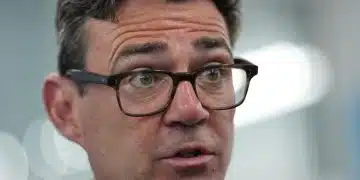
The more scrutiny Andy Burnham faces, the less popular he gets

The Makerfield by-election has got people around the country talking about Andy Burnham again. And a new poll has shown that, with increasing scrutiny, he’s become a lot less popular. We reckon that’s because he represents the same kind of fence-sitting, corporate politics that gave the UK Keir Starmer.
Unsurprising popularity dive
Voters tend to view most politicians unfavourably, overall. But Andy Burnham was a rare case before the by-election campaign. Because there were actually more people who viewed him favourably. That has quickly changed in recent weeks, though, with YouGov reporting that his:
favourability has declined markedly over the past two months
Even 2024 Labour voters see him more negatively, with an extra 8% feeling this way. But in Makerfield specifically, he’s still more popular than his party is. And that could potentially allow him to win the by-election.
YouGov quotes one voter in the North West as saying:
Andy Burnham typifies modern politicians who put style and personality over belief in what they stand for.
Burnham’s history of corporate funding and U-turns backs that up. And it’s also the story we’ve seen in the Makerfield by-election campaign. Because Burnham has:
- Failed to meet the Green promise to back public ownership of utilities, making some weak half-promises instead.
- Refused to speak out clearly against Israel’s genocide, unlike his Green opponent.
- Made some vague noises about electoral reform but said that any change would first need to “be in a manifesto and endorsed at a general election” (which Labour is unlikely to win outright ever again).
- Pledged to cut welfare and increase defence spending.
- Suggested he will look for private funds to help finish off the highly controversial HS2 rail project.
- Claimed to want “less factionalism” while refusing to entertain the idea of readmitting Jeremy Corbyn into the Labour Party.
Burnham may still win in Makerfield, but there would be little cause for celebration
Makerfield never seemed like prime Green territory. And it seems unlikely that the Green Party candidate will be a real challenger in the election. But voices inside and outside the party calling for unity behind Burnham as an anti-Reform candidate seem to have the dangerously false impression that he’s an antidote to Reform advances.
Challenging Burnham from the left in this by-election is primarily because he has consistently failed to make firm promises. The Greens may possibly have stepped aside if he had clearly committed to electoral reform before the next election, but he didn’t — even though party members back it. As Green leader Zack Polanski said:
Anyone committed to proper democratic renewal in this country must commit to bringing in fair and genuine proportional representation at the earliest possible opportunity… We also need to get big money out of politics, stop disinformation, and scrap the archaic and undemocratic House of Lords. We’ve heard lots of promises and warm words from many Labour figures – but when it comes to it, we see inaction, U-turns and half-measures.
Reform, meanwhile, may have been awful enough by itself to tank its chances of winning. Suggesting it would back notorious child abuser Jimmy Savile, being generally misogynistic, and getting tetchy with others on the far right could all contribute to Reform losing.
Because Andy Burnham has promised little apart from ‘more of the same’, though, a victory for him wouldn’t be cause for celebration. And that’s probably why the increase in scrutiny has reduced his popularity in recent weeks.
Keir Starmer’s government has set a low bar, so Burnham may stretch slightly over that if he becomes Labour leader. But he alone is too much of a corporate lackey to bring any meaningful change to our political system. For that, only consistent organising and pressure from ordinary people will really make a difference.
Featured image via the Canary


Leave a Reply