Police chiefs face questions over decades of political policing as Spycops Inquiry resumes

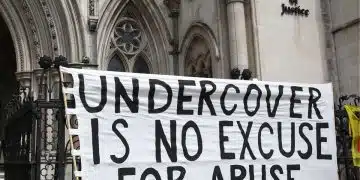
On Monday 15 June, the Spycops inquiry resumes and campaigners will be looking for answers. Tranche 3 Phase 3 of the Undercover Policing Inquiry (UCPI) is beginning. And it’ll be a crucial stage in the investigation into the Metropolitan police’s Special Demonstration Squad (SDS).
The Inquiry has heard evidence from former undercover officers and many of those whose groups, campaigns and personal lives they infiltrated. It’s now turning its attention to the senior officers and government departments who authorised, supervised and oversaw these operations.
For many of those affected, this phase goes to the heart of the Inquiry. The key question is no longer what spycops did. It’s who knew? Who approved? Who benefited from the intelligence on political campaigners and community organisations? And who helped conceal the truth?
Over the coming weeks the Inquiry will hear evidence from SDS managers, senior Special Branch officers and former Met leaders, including former commissioner Paul Condon.
Witnesses will be questioned about how undercover political policing was managed, what information was passed up the chain of command and why these operations were allowed to happen at all.
A spokesperson for the Campaign Opposing Police Surveillance said:
For years the public were told that undercover policing targeted serious criminals and threats to public safety. The evidence heard by this Inquiry has exposed a very different reality. Secret political policing units infiltrated environmental groups, anti-racist organisations, trade unions, anti-war movements and community organisations.
Officers stole the identities of dead children, formed deceptive intimate relationships, infiltrated grieving families seeking justice and gathered intelligence on thousands of people engaged in legitimate political activity.
This phase is about accountability. Who authorised these deployments and how the public and the courts were repeatedly misled about the true nature of these operations. Senior managers and commanders must finally explain how they allowed this system of political policing to continue for decades.
Spycops must come clean
A spokesperson for Police Spies Out of Lives said:
SDS managers can begin to restore public trust by giving open and honest evidence to the Inquiry. Most former officers have refused to do that, deepening the harm to those who were spied on. So far, there has been no real remorse for the abuses they enabled and oversaw.
Evidence so far has demonstrated that these operations weren’t just isolated misconduct by a few rogue officers. Instead, the Inquiry has revealed a system of abusive political policing which senior officers and government officials knew about and supported.
In his 2023 Interim Report, Spycops Inquiry chair John Mitting concluded that the SDS should have come to a rapid end in the early 1970s.
These hearings begin at a time when surveillance powers are once again expanding.
On 8 June, the government announced it was demanding Apple and Google to introduce what amounts to AI spyware able to monitor users’ messages and photos directly on smartphones and tablets, threatening legislation if the global tech giants do not comply.
Additionally the government launched PoliceAI, a national programme to accelerate the deployment of AI throughout policing in England and Wales.
These moves require urgent and robust democratic scrutiny.
A spokesperson for the Campaign Opposing Police Surveillance said:
The central lesson of the Spycops scandal is that surveillance powers are rarely used only for the purposes originally claimed.
At a time when AI is being embedded throughout policing and ministers are demanding monitoring technology be built into personal devices, the public should remember the lessons of Britain’s political policing scandal.
The history being examined by this Inquiry is not simply about the past. It is a warning for the future.
Inquiry hearings begin on Monday 15 June and will continue throughout the summer.
A timetable of those due to give evidence is here.
Sessions are open to the public and will take place at the IDRC, St Paul’s Square, London EC4Y 1EU. Or you can follow live proceedings on YouTube (broadcast with a 15 minute delay for security reasons).
Featured image via Peter Macdiarmid / Getty Images

Leave a Reply