
Welfare for the 21st century

Successive governments have decimate the welfare state. Curtis Daly takes a look at what happened and how we can build at a fair system that’s fit for the 21st Century and beyond.
Video transcript
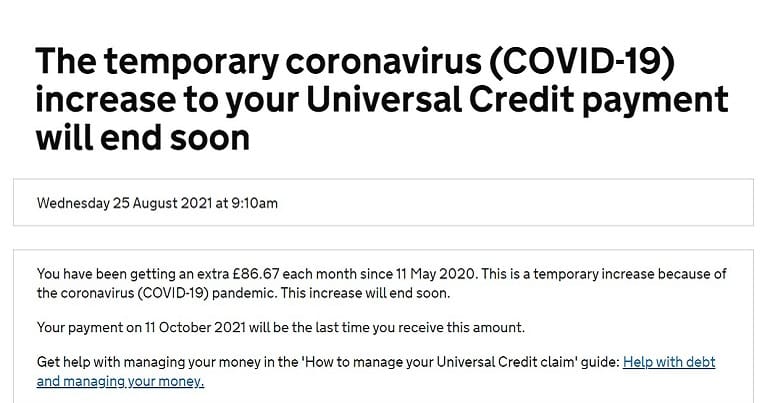
The government has confirmed that Universal Credit will be cut by £20 per week on the 6 October, meaning half a million people will be pushed into poverty. 200,000 of them are children. The government’s reasoning is to try and get people back into work. But according to the TUC, 40% of claimants are already in work.
The Joseph Rowntree Foundation has calculated that this will be “the biggest overnight cut to the basic rate of social security since the foundation of the modern welfare state”.
What we are really seeing is another callous way of punishing the poor.
The Creation of the Welfare State
The election of Clement Atlee’s Labour government was a political earthquake. After the bloody horrors of WW2, Britain forged a new political settlement – collectivism.
In 1942, William Beveridge put together a report aptly named the Beveridge Report which introduced the idea of a system of insurance that covered every citizen from cradle to grave.
The insurance system was aimed at providing a steady income and of catching those that were ill, unemployed, or elderly. Also included in the package was the National Health Service.
Fast forward to the late 70’s and the election of Margret Thatcher, a new consensus was born.
The seed of individualism was planted, which slowly grew over time.
Thatcher had no political capital to go after services such as the NHS– so instead, she needed to change the way people thought about society, or to convince people there wasn’t one.
And convince she did. This was Thatcher’s true legacy, a legacy that has continued until this day.
In 2010, the Thatcher-lite Labour Government was replaced by the Conservatives propped up by the Lib Dems. After decades of Thatcher’s destructive neoliberal project – and with her poisonous individualism still going strong – the way was paved for David Cameron’s austerity programme.
Public services were decimated, unemployment benefits were gutted, poverty grew, and lives were made exponentially harder. The DWP sanctioned claimants which pushed people into destitution.
Thousands died after being found ‘fit for work’ – how far had we come from the creation of the welfare state. A system that cared for all is now being weaponized to make lives worse. Our attitudes towards those on benefits have become utterly toxic.
The election of Jeremy Corbyn as the Labour leader saw a political shift. John McDonnell’s economic programme moved away from the idea of who can be tougher on benefits to a completely different analysis of the economy and society.
However, Keir Starmer has now more than hinted at his abandonment of his leadership pledges. One of those pledges was to scrap Universal Credit, now he wants to ‘overhaul them’. A shift in policy today, means the debate around benefits could go backwards.
The Future of the Welfare State
We cannot allow the welfare state to be destroyed, yet it’s clear that we cannot continue with the system as it stands.
The current means testing should be a thing of the past with a move towards universalism. This could safeguard any attacks from future governments like the one we have today.
But what would these systems look like?
Universal Basic Income
An idea you have probably already heard of is Universal Basic Income (UBI). An incredibly simple idea of just giving people money.
A system where everyone’s basic needs are met, where housing, food and necessities are no longer out of anyone’s reach. Regardless of income, everyone receives the same universal wage.
Won’t people be lazy?
Will they? It’s a perfectly valid question, but one that isn’t backed up by evidence. So far, the opposite seems to be true.
The largest and most in-depth study of UBI has concluded that it improves people’s mental health and financial well-being, and it even suggests that it increases employment.
Between 2017 and 2018, Finland ran a UBI experiment that saw 2,000 unemployed people receive an unconditional government wage.
When in contrast with those who were on standard unemployment benefits, those on UBI worked more on average.
Those who participated in the experiment had better cognitive function, better mental health, and higher confidence in contrast with those on unemployment benefits.
If it’s so good.. then why don’t we do it?
I don’t know… ask the government.
Universal Basic Services
Another slightly less well known idea is Universal Basic Services (UBS). This is a more traditional welfare system where instead of the current one being overhauled, UBS see’s it radically expanded.
Housing, health, transport, food, and internet would be provided for free from the state to everyone. Instead of being given financial help, the state exists as a much more egalitarian and redistributive role.
This sees society deal with inequality much better as it moves our economic system closer to a socialist one, whereas UBI is just an extension of social democracy.
UBS is being considered as an alternative to UBI as UBI could potentially be a vessel for extreme capitalist profits, whereby the state essentially puts money in the pockets of corporations via people. It could also pave the way for mass privatisation, with UBI being used as a way for services to become ‘products’.
Of course, much is to be discussed on these ideas, and the goal here is to push governments to fund these experiments – which they can do by making corporations and the mega rich pay their fare share of taxes, and adding a tax to speculative currency trading.
We must defend the rights of those being impoverished by our current system whilst building a society and welfare state fit for purpose.




Comments 1
Leave a Reply









The answer to the ills of UKania is for the turds who voted Tory stop doing so. Voting Tory is the Turkey Vote.
The problem is who to vote for ? Blue Labour under Kier Stalin is a disaster so who…….??