EU countries call for ‘forever chemicals’ ban as US detects wildly high levels in fish

Eating one freshwater fish caught in a river or lake in the US is the equivalent of drinking a month’s worth of water contaminated with toxic ‘forever chemicals’ called PFAS (per- and polyfluoroalkyl substances), new research said on 17 January.
The study comes after Denmark, Germany, the Netherlands, Norway, and Sweden submitted a proposal to ban PFAS to the European Chemicals Agency (ECHA) on 13 February.
Forever chemicals are everywhere
PFAS were first developed in the 1940s to resist water and heat, and are now used in items such as non-stick pans, textiles, fire suppression foams, and food packaging.
A recent BBC News investigation also showed that dozens of beauty products on sale in the UK contain the pollutants. The BBC explained that the chemicals can resist oil, as well as water, which makes them “highly valuable to the make-up industry”.
The indestructibility of PFAS means that the pollutants have built up over time in the air, soil, lakes, rivers, food, drinking water, and our bodies.
There have been growing calls for the stricter regulation for PFAS, which have been linked to a range of serious health issues including liver damage, high cholesterol, reduced immune responses, and several kinds of cancer.
Equal to a month’s worth of contaminated water
In the US study, a team of researchers analysed more than 500 samples from rivers and lakes across the US between 2013 and 2015 to determine the PFAS contamination in locally caught fish.
The median level of PFAS in the fish was 9,500 nanograms per kilogram according to the study, which the journal Environmental Research published.
Nearly three quarters of the detected ‘forever chemicals’ were PFOS (perfluorooctanesulfonic acid), one of the most common and hazardous of the thousands of PFAS.
Last year, the US Environmental Protection Agency lowered the level of PFOS in drinking water it considers safe to 0.02 parts per trillion.
According to the study, eating just one freshwater fish equalled drinking water with PFOS at 48 parts per trillion for a month, the researchers calculated. As CNN reported, David Andrews – a senior scientist at the non-profit Environmental Working Group that conducted the research – put the findings into context, explaining:
You’d have to drink an incredible amount of water — we estimate a month of contaminated water — to get the same exposure as you would from a single serving of freshwater fish.
He added that:
Consuming even a single (locally caught freshwater) fish per year can measurably and significantly change the levels of PFOS in your blood.
Previous studies have found high levels of forever chemicals in seabirds too, highlighting that exposure to such contamination has implications for many animals – not solely humans and fish.
Action and inaction on regulating forever chemicals
Andrews also told Agence France-Presse that the findings were:
particularly concerning due to the impact on disadvantaged communities that consume fish as a source protein or for social or cultural reasons
This research makes me incredibly angry because companies that made and used PFAS contaminated the globe and have not been held responsible.
The scientist called for much more stringent regulation to bring an end to all non-essential uses of PFAS.
Days before the study came to light, some EU countries – Denmark, Germany, the Netherlands, Norway and Sweden – moved to bring in a bloc-wide ban on forever chemicals. The ECHA, which received the proposal from the EU countries, called it “one of the broadest in the EU’s history”.
It comes after the five countries found that PFAS were not adequately controlled, and bloc-wide regulation was needed, the agency said in a statement.
The Guardian recently reported that the US also considered no less than 50 bills related to PFAS regulation in its last session in the US Congress. However, only a handful made any progress, two of which effectively just provided subsidies for the industry. In other words, US lawmakers took no meaningful action on prohibiting the harmful chemicals.
Environmental campaigners suggested that lobbying by corporate interests was instrumental in the political inaction. The Natural Resources Defense Council’s senior strategic director Erik Olson said that chemicals industry:
is basically battening down the hatches, digging their trenches for defense, and shooting their salvos to stop anything that would significantly control PFAS.
Additional reporting by Agence France-Presse
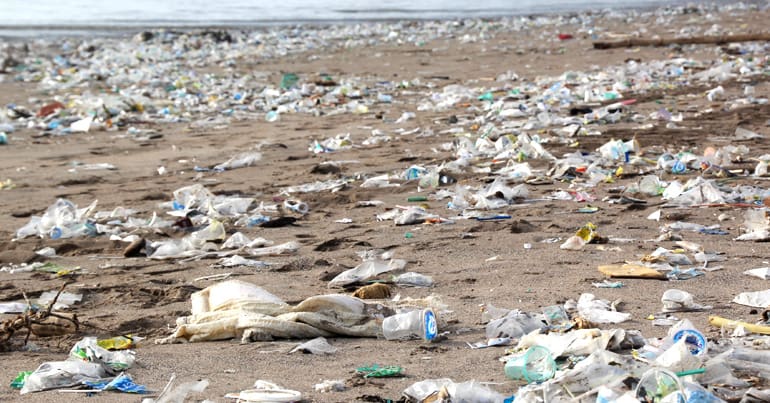
Featured image via Wikimedia Commons, cropped to 770×403, licensed under CC BY 2.0




Leave a Reply