How to talk with children about terror

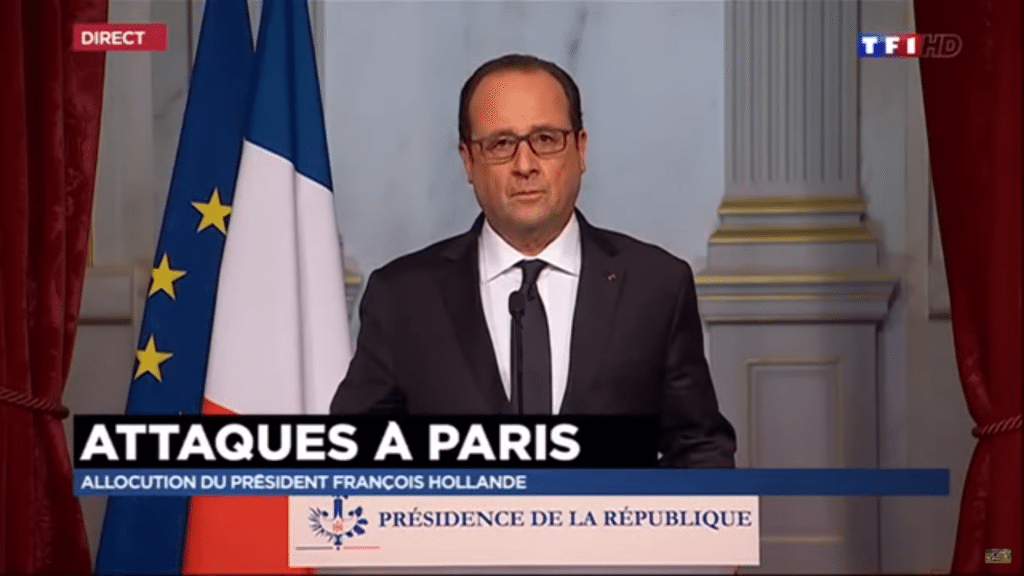
As we attempt to process the events in Paris on Friday 13 November, hungry for more news, it is worth remembering that children will be equally bewildered. The youngest in your circle may be curious to listen to what adults have to say, but are not necessarily equipped to deal with what they hear. During one period of my childhood there was a lot of conversation about police brutality and nuclear war. While I think it is important that parents raise their children with a rounded view of the world, for good or ill, there is not much happy news on television, and I still have nightmares. Finding the correct boundaries for a child is very important at times like these.
First of all, try to turn the television off, especially during the media saturation phase, and even for teens. For tiny children, who are particularly attuned to sounds of human distress, try to limit the exposure completely. Emphasise to the child that they are safe. Naturally the age of the child will influence how you tackle this subject, but their level of immediate distress should also temper what you say. It is hard to find any good in the events with which to give a child a parallel narrative about the goodness of people, but Fred Rogers‘ mother had exactly the right response:
My mother would say to me, ‘Look for the helpers. You will always find people who are helping.’ To this day, especially in times of disaster, I remember my mother’s words, and I am always comforted by realising that there are still so many helpers — so many caring people in this world.
For young school-age children, be realistic about what they may hear in the playground, and prepare them. The bad news is better coming from you than from their friends, newspapers forgotten on the ground, or other media. Start and end this conversation with the reassurance that they and their loved-ones are safe. Back up those reassurances with physical closeness, so that they actually feel physically protected. It is also important to stick to, or even make a point of, normal family routines like tidying up together or matching socks – anything banal. Demonstrate that life must go on and that you are not afraid. Children extrapolate and generalise. Your reaction at this stage will give them the tools to weather future shocking events, so it is essential to model calm and compassion. If your child seems distressed but cannot speak about the trauma, they may be able express themselves via a drawing. Remind children about their safety and explain that they can turn to teachers and family if they are scared.
Try not to complicate the issue by going beyond the basic facts or apportioning blame. Essentially, make the conversation about the child, not the event. Children need to have some understanding of what is happening in order to process what is going on around them. Comforting lies are counterproductive, but the age of the child will dictate what you omit. Let the child lead the discussion, as it will tell you how much reality they can bear. When a child asks a question it is useful to find out why they asked it, so you can give them the information they need. Take time to listen – more complicated debates can come later, when the general atmosphere is calmer. Be careful not to minimise your child’s concerns, even if they are about whether or not Santa will be free to travel. One key element of your conversations should be that no one will know all the answers. This helps to insulate them against hateful messages by giving them the tools to frame uncertain information. If someone else has discussed the event with your child before you have a chance to, start by asking them what they know. This is also a good way to round off a discussion because it enables you to correct anything they have misunderstood.
It is easy to forget that children get exposed to horrific scenes via the news, and sometimes difficult to protect them from it. Obviously, they take their cues from the adults around them, which means that ‘closer to home’ events which produce such vivid horror, such as the attacks in Paris, are particularly complicated. They may well have challenging questions about how these deaths differ from the nightly parade of slaughter, or perhaps more worryingly, not.
Featured image by Amber Kennedy via Flikr