• Donate
  • Login
Wednesday, July 22, 2026
  • Login
  • Register
Canary
Cart / £0.00

No products in the basket.

MEDIA THAT DISRUPTS
  • UK
  • Global
  • Opinion
  • Skwawkbox
  • Manage Subscription
  • Support
  • Features
    • Health
    • Environment
    • Science
    • Feature
    • Sport & Gaming
    • Lifestyle
    • Tech
    • Business
    • Money
    • Travel
    • Property
    • Food
    • Media
  • SHOP
No Result
View All Result
MANAGE SUBSCRIPTION
SUPPORT
  • UK
  • Global
  • Opinion
  • Skwawkbox
  • Manage Subscription
  • Support
  • Features
    • Health
    • Environment
    • Science
    • Feature
    • Sport & Gaming
    • Lifestyle
    • Tech
    • Business
    • Money
    • Travel
    • Property
    • Food
    • Media
  • SHOP
No Result
View All Result
Canary
No Result
View All Result
  • Editorial
  • Explainer
  • Global
  • Opinion
  • Environment
  • Feature
  • Food
  • Health
  • Science
  • Skwawkbox
  • UK

Here’s the inconvenient truth about Syria’s chemical weapons that Theresa May is hoping you won’t notice

Emily Apple by Emily Apple
14 April 2018
in Analysis, Global, UK
Reading Time: 3 mins read
168 5
A A
0
Home UK Analysis
Share on FacebookShare on TwitterShare on BlueskyShare via WhatsAppShare via TelegramShare on Threads

As Theresa May bombs Syria, there’s an inconvenient truth behind Syria’s possession of chemical weapons that she’d like us to forget. UK companies provided chemicals to Syria. And former Conservative Party leader William Hague admitted it was “likely” that these chemicals were used to produce weapons.

The UK’s murky past

In the 1980s, UK companies sold chemicals including dimethyl phosphite, trimethyl phosphite, and hydrogen fluoride (through a third country) to Syria. Speaking to parliament when he was foreign secretary in 2014, Hague stated:

From the information we hold, we judge it likely that these chemical exports by UK companies were subsequently used by Syria in their programmes to produce nerve agents, including sarin.

But it didn’t stop in the 1980s. UK companies were still exporting chemicals to Syria in 2012. Seven chemical export licences were reportedly issued between 2004 and 2012:

It is worth noting that the British Government approved exports of dual use precursors for chemical weapons including sarin to Syria between 2004 and 2012, after the civil war began and after Assad was accused of using gas. CAEC report (2015): pic.twitter.com/TsvthAcZRR

— Lloyd Russell-Moyle 🌹🏳️‍🌈 (@lloyd_rm) April 13, 2018

Former business secretary Vince Cable claimed he was:

confident that each application was properly assessed to determine end use and that the exports were for legitimate commercial purposes, namely cosmetics and health care products.

But Cable refused to publish the names of the companies involved in the exports. And he provided no further information to help verify his claims.

The 2012 licences were revoked in July 2012, after the tightening of EU sanctions, and the Business Department insisted that none of the chemicals had been shipped out.

Supporting arms dealers

The UK’s commitment to stopping arms sales to Syria seems, at best, murky. In 2003, when Syria was described as a “terrorist sponsoring state”, its government was invited to attend the Defence and Security Exhibition International (DSEI) arms fair in London.

And in 2013, Rostec – the Russian company that allegedly provided three quarters of all Syria’s weapons – was allowed to exhibit at DSEI. Oliver Sprague from Amnesty UK stated:

As the world abhors the catastrophe unfolding in Syria, it is astonishing that the British Government has allowed one of President Assad’s main weapon suppliers to showcase its wares on these shores.

Stop the arms trade

The UK is well known for fuelling conflict around the world. Currently, May’s government is facing legal action for arming Saudi Arabia.

According to the United Nations, at least 10,000 people have been killed in the conflict in Yemen and three million people have been displaced. UNICEF reports that more than 5,000 children have been killed or injured in Yemen since the conflict began in March 2015. Cholera and acute diarrhoea, meanwhile, have affected over a million people, and over 8 million people are at risk of starvation.

But this hasn’t stopped the government licensing $6.4bn of weapons since the start of the war in 2015.

As May releases the bombs, it seems she’d rather we forget this inconvenient truth. Because if we remember, we might start questioning. And we might start realising that the best way to end conflict in Syria (and elsewhere) is to ban the global arms trade. Otherwise, history will just keep repeating itself.

Get Involved!

– Support Campaign Against Arms Trade.

Featured image via screengrab
Tags: Syria
Share128Tweet80ShareSendShareShare
Previous Post

Before Theresa May starts shaking the magic money tree, consider the costs of war

Next Post

As war starts in Syria, the company that tortured prisoners in Abu Ghraib may already be on the ground

Next Post
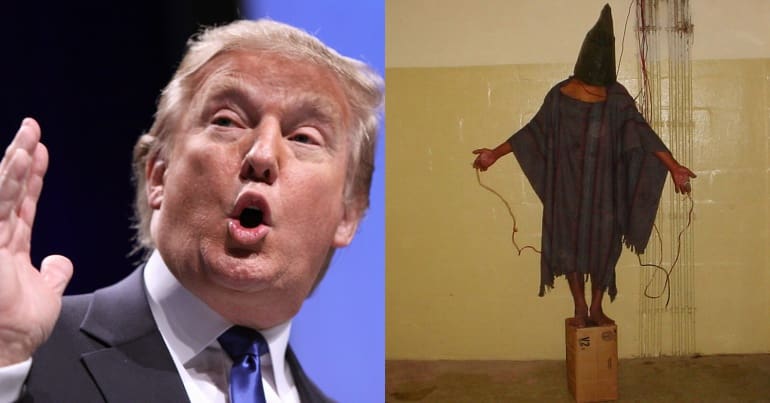
Donald Trump, image of a tortured prisoner at Abu Ghraib

As war starts in Syria, the company that tortured prisoners in Abu Ghraib may already be on the ground

Rapper Lowkey talking to the media

The rapper and activist Lowkey calls out the government over the Grenfell tragedy

Bombs and money

As the bombs fall on Syria, one company's share price reaches a record high

Nicola Sturgeon at anti-nuke rally

Nicola Sturgeon raises a crucial question about the Syria airstrikes

Jeremy Corbyn and plane taking off to bomb Syria

Jeremy Corbyn goes to town on Theresa May for bowing to the 'whims of a US President'

Burnham
Opinion

Don’t worry: we get that sinking feeling too when Andy Burnham opens his mouth

by Rachael Swindon
21 July 2026
How to Launch New Payment Providers Faster Without Rebuilding Your Infrastructure
Money

How to Launch New Payment Providers Faster Without Rebuilding Your Infrastructure

by Nathan Spears
21 July 2026
Israel kill 17 year old Fadi Hamdallah Al-Nassan with expanding bullet
Analysis

Israel kill 17 year old Fadi Hamdallah Al-Nassan with expanding bullet

by Charlie Jaay
20 July 2026
west bank, Palestine
Analysis

Israel restricting safe access to education for children in the occupied West Bank

by Charlie Jaay
20 July 2026
Messi broken, Argentina finish with no shots, no real threat against Spain
Sports

Spain win second World Cup after suffocating Argentina out of game

by Faz Ali
20 July 2026

The Canary
PO Box 71199
LONDON
SE20 9EX

Canary Media Ltd – registered in England. Company registration number 09788095.

For guest posting, contact [email protected]

For other enquiries, contact: [email protected]

Complaints and Corrections

About the Canary

Meet the Team

© Canary Media Ltd 2026, all rights reserved | Website by Monster | Hosted by Krystal | Privacy Settings

Ok

Create New Account!

Fill the forms below to register

All fields are required. Log In

Retrieve your password

Please enter your username or email address to reset your password.

Log In
  • UK
  • Global
  • Opinion
  • Skwawkbox
  • Manage Subscription
  • Support
  • Features
    • Health
    • Environment
    • Science
    • Feature
    • Sport & Gaming
    • Lifestyle
    • Tech
    • Business
    • Money
    • Travel
    • Property
    • Food
    • Media
  • SHOP
  • Login
  • Sign Up
  • Cart