• Donate
  • Login
Saturday, June 13, 2026
  • Login
  • Register
Canary
Cart / £0.00

No products in the basket.

MEDIA THAT DISRUPTS
  • UK
  • Global
  • Opinion
  • Skwawkbox
  • Manage Subscription
  • Support
  • Features
    • Health
    • Environment
    • Science
    • Feature
    • Sport & Gaming
    • Lifestyle
    • Tech
    • Business
    • Money
    • Travel
    • Property
    • Food
    • Media
  • SHOP
No Result
View All Result
MANAGE SUBSCRIPTION
SUPPORT
  • UK
  • Global
  • Opinion
  • Skwawkbox
  • Manage Subscription
  • Support
  • Features
    • Health
    • Environment
    • Science
    • Feature
    • Sport & Gaming
    • Lifestyle
    • Tech
    • Business
    • Money
    • Travel
    • Property
    • Food
    • Media
  • SHOP
No Result
View All Result
Canary
No Result
View All Result
  • Editorial
  • Explainer
  • Global
  • Opinion
  • Environment
  • Feature
  • Food
  • Health
  • Science
  • Skwawkbox
  • UK

Even our nuclear weapons are privatised, and it’s a potential disaster

Marianne Edwards by Marianne Edwards
16 August 2017
in UK
Reading Time: 3 mins read
166 7
A A
0
Home UK
Share on FacebookShare on TwitterShare on BlueskyShare via WhatsAppShare via TelegramShare on Threads

The UK, along with the US, Belgium, Germany, Italy, the Netherlands and Turkey, have private companies making and managing their nuclear weapons. Germany’s aim of reducing its arsenal was scuppered in September 2015, when the hard sell of new bombs from the USA went against the wish of the voters. One can’t help feeling that if Iran were serious about arming itself with nuclear weapons, they’d be getting a private company to do it, like everyone else.

The Nuclear Non-proliferation Treaty stipulates that signatories should work towards disarmament. However, according to Armin Krishnan, Assistant Professor for Security Studies at East Carolina University, specialising in military technology:

The next generation of nuclear weapons could be different from the submarine based system, for example low-yield nuclear gravity bombs or nuclear cruise missiles. It has been proposed by think tanks that the US should station low yield nuclear weapons in Europe and the US may supply such weapons to European allies.

Millions of people in the UK have no idea that neither the navy nor the government owns Trident, and that the maintenance, design and testing of Britain’s nuclear capabilities all come via US companies. The last of the UK’s shares in British Nuclear Fuels, and so any ownership of its nuclear fleet of two, were quietly sold off by Labour in December 2008. Essentially Trident is in private hands. In an email, Armin Krishnan confirmed that:

I don’t think that Britain’s nuclear deterrent is really independent or that it contributes much to British national security.

The arguments against private companies replacing state functions are the same whether or not it’s the NHS or nuclear weapons. Private companies have a poor record on observing the rules, and some throw money at lobbyists until they get what they want. One only has to look at the safety record of the post-Thatcher data-set amply demonstrates that the shareholder imperative means that quality and safety are not priorities. The safety scandals of Hinchingbrooke Hospital and Railtrack are small fry when compared to the scale of human suffering caused by bailing out the bankers and blaming the poor, both in the UK and the rest of Europe. The data proves that there isn’t room for profit when it comes to big expensive things on which millions of lives depend, National Health Services, the Welfare State and nuclear submarines.

Unsurprisingly, after years of being in grasping private hands, there are huge questions about the safety of these submarines. It was an open secret that they were leaking radioactive waste, and the full list of accidents makes horrifying reading, not least because there are bound to be more that they’re not telling us. Would we even know if one of these silent nuclear whales became a floating Fukushima? According to the Wikileaks testimony of William McNeilly:

We are so close to a nuclear disaster it is shocking

Tellingly, this brave whistleblower did not go to jail, despite fully expecting to. He catalogued several dangerous situations – fires, in particular, as rubbish sat by cables caught fire, as did fuel leaking from the missiles themselves. There were other examples of an almost slapdash attitude to safety and procedures. He also showed that failure to follow proper security protocols meant that almost anyone could get aboard a nuclear submarine. Not that you’d want to.

We can only hope that Corbyn is playing a long game for getting rid of Trident. After all, it isn’t even controlled by us.


Image via CTBTO/Flickr

Tags: Iranprivatisation
Share129Tweet81ShareSendShareShare
Previous Post

From Dismaland to the West Bank – is Banksy a hypocrite?

Next Post

Will the government’s extremist agenda criminalise mental health?

Next Post
Will the government’s extremist agenda criminalise mental health?

Will the government's extremist agenda criminalise mental health?

Oldest spiny mouse fossil found with fur, skin and organs

Oldest spiny mouse fossil found with fur, skin and organs

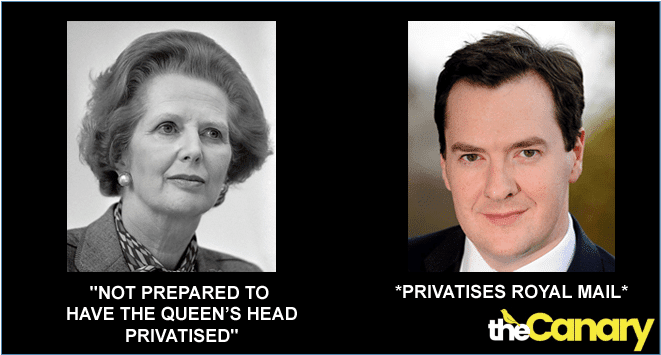
Thatcher vs Osborne on Royal Mail

Osborne knows nothing about Royal Mail, but that hasn’t stopped him from selling it to his friends in the City

A Canadian city eliminates homelessness, Tories continue to increase it

A Canadian city eliminates homelessness, Tories continue to increase it

Media predicts a Labour crisis, then 91% back Corbyn

Media predicts a Labour crisis, then 91% back Corbyn

Korea Republic v Czechia: Group A - FIFA World Cup 2026 GUADALAJARA, MEXICO - JUNE 11: Hee-Chan Hwang #11 of Korea Republic runs with the ball whilst under pressure from Stepan Chaloupek #6 of Czechia during the FIFA World Cup 2026 Group A match between Korea Republic and Czechia at Guadalajara Stadium on June 11, 2026 in Guadalajara, Mexico. (Photo by Alex Slitz/Getty Images)
Sport & Gaming

South Korea fight back to beat Czech Republic in a tough contest

by Faz Ali
13 June 2026
Mexico v South Africa: Group A - FIFA World Cup 2026 MEXICO CITY, MEXICO - JUNE 11: Julian Quinones #16 of Mexico celebrates with teammates after scoring the team's first goal during the FIFA World Cup 2026 Group A match between Mexico and South Africa at Mexico City Stadium on June 11, 2026 in Mexico City, Mexico. (Photo by Carl Recine/Getty Images)
Sport & Gaming

Mexico light the fuse in a wild World Cup opener

by Faz Ali
12 June 2026
Lebanon
Skwawkbox

Lebanon’s US-aligned PM condemns Iran for Israel’s attacks in deranged interview

by Skwawkbox
12 June 2026
World Cup
Global

German fan dies ahead of the 2026 World Cup

by Alaa Shamali
12 June 2026
German
Global

German coach Low criticises FIFA and the 2026 World Cup format

by Alaa Shamali
12 June 2026

The Canary
PO Box 71199
LONDON
SE20 9EX

Canary Media Ltd – registered in England. Company registration number 09788095.

For guest posting, contact [email protected]

For other enquiries, contact: [email protected]

Complaints and Corrections

About the Canary

Meet the Team

© Canary Media Ltd 2026, all rights reserved | Website by Monster | Hosted by Krystal | Privacy Settings

Ok

Create New Account!

Fill the forms below to register

All fields are required. Log In

Retrieve your password

Please enter your username or email address to reset your password.

Log In
  • UK
  • Global
  • Opinion
  • Skwawkbox
  • Manage Subscription
  • Support
  • Features
    • Health
    • Environment
    • Science
    • Feature
    • Sport & Gaming
    • Lifestyle
    • Tech
    • Business
    • Money
    • Travel
    • Property
    • Food
    • Media
  • SHOP
  • Login
  • Sign Up
  • Cart